|
 |
 | | | | | | |||||||||||||||||||||||||||||||||||||||||||||||||||||||||||||||||||||||||||||||||||||||||||||||||||||||||||||||||||||||||||||||||||||||||||||||||||||||||||||||||||||||||||||||||||||||||||||||||
| | | You are in: Americas | |||||||||||||||||||||||||||||||||||||||||||||||||||||||||||||||||||||||||||||||||||||||||||||||||||||||||||||||||||||||||||||||||||||||||||||||||||||||||||||||||||||||||||||||||||||||||||||||||||
|
| | Wednesday, 18 September, 2002, 17:13 GMT 18:13 UK Left-wing Lula leads the polls 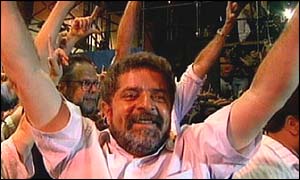 'Lula' will have to survive a mudslinging campaign
Brazil's veteran left-wing Workers' Party candidate, Luis Inacio Lula da Silva or "Lula" will have his best chance yet of winning power when Latin America's biggest country goes to the polls on 6 October. This will be Lula's fourth attempt - and a victory would mark a watershed for the left in Latin America. But he will have to first survive what promises to be a mud-slinging campaign by the government candidate, Jose Serra, who is at present a distant second place in opinion polls.
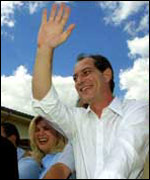
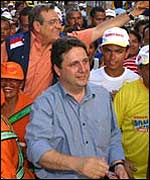
Ciro Gomez is a Harvard-educated former state governor from the traditional ruling elite of north-east Brazil. He uses the rhetoric of the left, but has looked for allies among many of the conservative old guard of Brazilian politics. Anthony Garotinho, a former governor of Rio de Janeiro, is standing on an anti-International Monetary Fund (IMF) platform well to the left of the other candidates. Poverty and crime If Lula fails to win more than 50% in the first round, there will be a run-off on 27 October. Many congressional seats and state governments are also being disputed. The election will end eight years of market-friendly government by Fernando Henrique Cardoso, which has bought unparalleled political stability to Brazil but has failed to bridge the massive gap between rich and poor. Many ordinary Brazilians have yet to see the see the fruits of democracy.
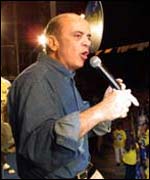
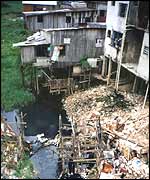
Many of Brazil's vast urban slums now have the murder rates of war zones - fuelled by rising unemployment. International investors are strongly backing the government candidate, Jose Serra, a loyal ally and close friend of President Cardoso. As health minister he directed Brazil's anti-Aids policy, which provides free treatment using patent-breaking generic medicines produced in the country. 'Donkey' While campaign posters promote him as "The Name of Change," in practice he is likely to continue the broad outline of present policy, promoting gradual market and political reforms. He would not however enjoy the support in Congress of conservative parties who helped President Cardoso win the last two presidential elections - the ruling alliance has suffered an acrimonious split since then.
Many of the traditional rulers of northern Brazil, who have held positions in every government for decades going back to the days of military rule, switched their allegiance to Ciro Gomez at the start of the campaign. At that time Ciro Gomez made a spectacular leap in the opinion polls and looked as if he might win the presidency. Since then he has slumped into third or forth place after a series gaffs, mercilessly exploited by his opponents. These included calling one member of the public "a donkey", and joking that his popular soap opera star girlfriend is playing a crucial role in the campaign - by sleeping with him. Moderate image Lula lost the last three elections after his opponents portrayed him as a socialist bogeyman who would drive away foreign capital, force businessmen to leave and set up a Cuban-style state. Mr Serra's campaign is once again trying to portray the Workers' Party as a radical threat to Brazil's stability, with pictures of past rallies and speeches.
But he has always supported multi-party democracy. In this campaign he has swapped his overalls for a suit and tie and is presenting a far more moderate image. He has promised to honour all international agreements for debt repayment and stick by strict IMF public spending conditions. Privatisation Many business leaders and market analysts in Brazil now say the danger of radical change under Lula has been exaggerated. Indeed, some are angry that government scaremongering in the early stages of the campaign caused havoc on financial markets. Investors pulled out en masse and the Brazilian currency slipped badly against the dollar, forcing the IMF to intervene with a record $30bn (�19.5bn) bailout.
On paper both Lula and Serra have similar economic platforms, with both promising to create millions of new jobs and boost exports to reduce the debt burden. Lula says he would fight Brazil's massive wealth inequality - the fourth worst in the world - by pushing up wages and providing large-scale support for co-operatives. Mr Serra says he would continue the present government's almost completed privatisation program. Lula would stop it - but not reverse it. Tough challenge While all candidates are promising change, delivering will be much harder. The winner will inherit a massive $250bn public debt. He will have to stick to IMF guidelines. He will not have automatic support in Congress and will have many hostile governments at state level. Indeed, he will quickly be forced by Brazil's complicated political system to make dozens of compromises and backdoor deals with entrenched interests who have for decades done very well out of the status quo. | |
See also:  20 Aug 02 | Americas 19 Jul 02 | Americas Internet links: The BBC is not responsible for the content of external internet sites Top Americas stories now: Links to more Americas stories are at the foot of the page. | |||||||||||||||||||||||||||||||||||||||||||||||||||||||||||||||||||||||||||||||||||||||||||||||||||||||||||||||||||||||||||||||||||||||||||||||||||||||||||||||||||||||||||||||||||||||||||||||||
| |
|  E-mail this story to a friend E-mail this story to a friend |
| |
| Links to more Americas stories |
| | | ||
 | ||||
 | | Back to top
| ||
| ---------------------------------------------------------------------------------- To BBC Sport>> | To BBC Weather>> | To BBC World Service>> ---------------------------------------------------------------------------------- © MMIII | News Sources | Privacy |