|
 |
 | | | | | | |||||||||||||||||||||||||||||||||||||||||||||||||||||||||||||||||||||||||||||||||||||||||||||||||||||||||||||||||||||||||||||||||||||||||||||||||||||||||||||||||||||||||||||||||||||||||||||||
| | | You are in: Americas | |||||||||||||||||||||||||||||||||||||||||||||||||||||||||||||||||||||||||||||||||||||||||||||||||||||||||||||||||||||||||||||||||||||||||||||||||||||||||||||||||||||||||||||||||||||||||||||||||
|
| | Wednesday, 11 September, 2002, 21:32 GMT 22:32 UK Analysis: Bush's UN tactics on Iraq 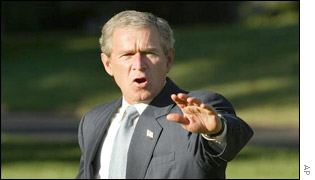 Toughen up your resolutions, Mr Bush will tell the UN
President George W Bush's speech to the UN General Assembly in New York on Thursday will press his case against Iraq and implicitly warn the UN that if it doesn't act, the United States will. He wants a new Security Council resolution calling on Iraq to allow inspectors back in, and he will make it clear that time is short. If Iraq does not comply, George Bush will suggest, then action will follow. That threat of action was described by the British Defence Secretary Geoff Hoon as the "sting in the tail" of any UN resolution in an interview with the BBC. Having one resolution would be a shorter process than the two-stages proposed by French President Jacques Chirac, who suggested laying down a deadline in one resolution and then agreeing on action in a second. Mr Bush will change the tone from the remarks he made on 11 September, which concentrated on remembering those who died that day, and on recommitting himself to the war on terror that he declared shortly after the attacks. 'World cannot wait' In his speech he will turn specifically towards the next target - Iraqi President Saddam Hussein.
He referred to Saddam without naming him in a speech in New York on Thursday evening when he said that "we will not allow any terrorist or tyrant to threaten civilisation with weapons of mass murder." He also gave a hint of his likely language in an earlier article in the New York Times: "With our allies, we must confront the growing threat of regimes that support terror, seek chemical, biological and nuclear weapons and build ballistic missiles. On this issue, the consequences of inaction could be catastrophic. ''We refuse to ignore the aggression and brutality of evil men.'' Mr Bush is expected to call on the United Nations to put some muscle into enforcing the Security Council resolutions that are supposed to ban Iraq from possessing chemical, biological or nuclear weapons or any missiles with a range greater than 150km. The Americans released a document in advance of the speech detailing how Saddam had ignored Security Council resolutions: "For more than a decade, Saddam Hussein has deceived and defied the will and resolutions of the United Nations Security Council." Pre-emptive action A number of think-tank and government reports over recent months and years have argued that Iraq has retained both biological and chemical weapons and is seeking to develop a nuclear bomb. However, all agree that without help from abroad in getting plutonium or enriched uranium, Iraq is years away from developing a bomb by itself. President Bush will argue that the world cannot wait to find out if Iraq has the bomb or not.
The 11 September hijackings, he argues, showed that sudden and unexpected attacks can take place on a significant scale and that pre-emptive action might be required. Officials in Washington have said that Mr Bush believes that ''inaction is simply not an option''. However, only the most intrusive and open-ended inspection programme by the UN is likely to delay a military operation. The president's speech is part of a multi-fronted approach he is taking to prepare the ground for action against Iraq. He has listened to those within his administration, like Secretary of State Colin Powell, who have argued for making the problem an international one.
And his UN speech is being matched by his wooing of the US Congress and his allies abroad. Congress is going to be a hard nut to crack, though. The Republican leader in the House of Representatives, Dick Armey, said he would ''set the mark very high''. ''I will need to see a plan before I will cast a vote'', he said: ''I will need to see it is necessary, and there is a plan that I personally think is fair to the courage we ask of these young people." Congress has not decided whether to hold a vote before elections to both houses on 5 November, though the administration has been pressing for one in October. Mr Bush's diplomacy at home and abroad has moved into high gear. | |
See also:  11 Sep 02 | Africa 11 Sep 02 | Hardtalk 11 Sep 02 | Middle East 11 Sep 02 | Middle East 10 Sep 02 | Middle East 10 Sep 02 | Americas 17 Jan 02 | Americas Internet links: The BBC is not responsible for the content of external internet sites Top Americas stories now: Links to more Americas stories are at the foot of the page. | |||||||||||||||||||||||||||||||||||||||||||||||||||||||||||||||||||||||||||||||||||||||||||||||||||||||||||||||||||||||||||||||||||||||||||||||||||||||||||||||||||||||||||||||||||||||||||||||
| |
|  E-mail this story to a friend E-mail this story to a friend |
| |
| Links to more Americas stories |
| | | ||
 | ||||
 | | Back to top
| ||
| ---------------------------------------------------------------------------------- To BBC Sport>> | To BBC Weather>> | To BBC World Service>> ---------------------------------------------------------------------------------- © MMIII | News Sources | Privacy |