|
 |
 | | | | | | ||||||||||||||||||||||||||||||||||||||||||||||||||||||||||||||||||||||||||||||||||||||||||||||||||||||||||||||||||||||||||||||||||||||||||||||||||||||||||||||||||||||||||||||||||||||||||||||||
| | | You are in: Americas | ||||||||||||||||||||||||||||||||||||||||||||||||||||||||||||||||||||||||||||||||||||||||||||||||||||||||||||||||||||||||||||||||||||||||||||||||||||||||||||||||||||||||||||||||||||||||||||||||||
|
| | Wednesday, 11 September, 2002, 13:58 GMT 14:58 UK Hispanics face cash crisis 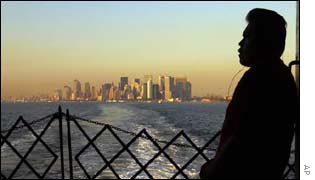 Many Hispanic workers have lost their jobs
On 12 September 2001 there were some 100,00 unemployed people in New York City. Of those, at least 3,000 were Hispanics without proper documentation. For many, events of 11 September brought a year of even more hardship.  Businesses within the World Trade Center disappeared and many establishments in Lower Manhattan were forced to close for an indefinite period. One of the only working restaurants within the World Financial Center, Au Mandarin, recently re-opened its doors after nine months. One of its owners, Mr Yung, says the loss of clientele caused profilts to plummet.
Today, barely 10,000 people work in and around the WTC area every day. Before the attacks, the figure was around 45,000. After spending several months out of work, Georgina Conde managed to get her job back in a restaurant close to Ground Zero. "But it's not the same," she says. "My pay has been cut by half and when there are no clients I don't take home anything." Georgina, the mother of six children, came to New York from Mexico with her husband 13 years ago. She says things have never been so hard. "We had to tighten our belts, but we manage to survive on what my husband earns." Financial loss The Tepeyac Association, a social organisation devoted to helping Hispanic immigrants, has helped 900 former World Trade Center workers. "These people didn't have anywhere to turn to because they were illegal and could not prove any financial loss," explains Joel Magall�n, director of the group. "Here in New York, life got very difficult because nobody wants to employ people without papers," says Mario Espejo, a Peruvian who lost his hotel job as a result of the tragedy.
"These last few months have been very difficult and also I had to send money to my family in Peru." The family of Joaqu�n, from Mexico, also expects monthly remittances. But, he says, it gets more difficult every day because the wages are lower and work is scarce. "I have to work in anything I can find, normally I go to three or four places just to see if they need workers on the day." In spite of everything, these two prefer to stay in New York, because the wages they earn in their own countries would not support their families. "My children have the chance to go to school here," says Georgina Conde. "We can only hope there will not be a repeat of the tragedy." | |
See also:  21 Jul 02 | Americas 16 Jul 02 | Americas 20 Aug 02 | Americas 06 Sep 02 | Americas 31 May 02 | Americas 02 Jul 02 | Americas 21 Sep 01 | Business 16 Apr 02 | Americas Internet links: The BBC is not responsible for the content of external internet sites Top Americas stories now: Links to more Americas stories are at the foot of the page. | ||||||||||||||||||||||||||||||||||||||||||||||||||||||||||||||||||||||||||||||||||||||||||||||||||||||||||||||||||||||||||||||||||||||||||||||||||||||||||||||||||||||||||||||||||||||||||||||||
| |
|  E-mail this story to a friend E-mail this story to a friend |
| |
| Links to more Americas stories |
| | | ||
 | ||||
 | | Back to top
| ||
| ---------------------------------------------------------------------------------- To BBC Sport>> | To BBC Weather>> | To BBC World Service>> ---------------------------------------------------------------------------------- © MMIII | News Sources | Privacy |