|
 |
 | | | | | | ||||||||||||||||||||||||||||||||||||||||||||||||||||||||||||||||||||||||||||||||||||||||||||||||||||||||||||||||||||||||||||||||||||||||||||||||||||||||||||||
| | | You are in: Americas | ||||||||||||||||||||||||||||||||||||||||||||||||||||||||||||||||||||||||||||||||||||||||||||||||||||||||||||||||||||||||||||||||||||||||||||||||||||||||||||||||
|
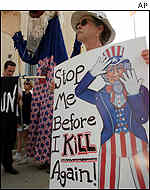
| | Monday, 1 July, 2002, 18:07 GMT 19:07 UK US judge blocks federal death penalty The US Government is expected to appeal the decision A US judge has ruled that the federal death penalty is unconstitutional, in a decision set to reignite national debate over the contentious issue.
Judge Jeb Rakoff said in his ruling that the federal death penalty act violated the constitutional rights of defendants and ran the risk of putting innocent people to death. "(It) deprives innocent people of a significant opportunity to prove their innocence and creates an undue risk of executing innocent people," he said. It is thought to be the first time a judge has declared the law unconstitutional since the law was put into effect in 1994, and the US Government is expected to appeal against the decision. Forensic advances Mr Rakoff was ruling on a case brought by defence lawyers for two alleged drug dealers - Alan Quinones and Diego Rodriguez - accused of the torture and murder of a man they apparently suspected of informing on them to police. The men's lawyers had placed a motion for the death penalty not to be imposed should the men be found guilty in their forthcoming trial. Despite extensive arguments against the motion by prosecution lawyers acting for the US Government, the judge said he was not convinced. He added that a 1993 Supreme Court ruling - which found that the chances of someone innocent being convicted of a crime were remote - was rendered obsolete by the considerable advances in DNA profiling and other forensic devices. "DNA testing has proved... the remarkable degree of fallibility in the basic fact-finding processes on which we rely in criminal cases," he said. The ruling could be used to block executions in the state of New York and also Connecticut and Vermont, which fall within the same judicial circuit as Mr Rakoff's Manhattan court. More than 3,700 people are currently on death row in the United States. Ethical debate The US legal system has dealt several blows to the death penalty in the past few months in what has been seen as a willingness to curb its use if legal arguments prove compelling. In June this year the US Supreme Court, the highest in the land, overturned death sentences imposed on dozens of convicted killers after finding that juries alone - not judges - should have the authority to impose a sentence of death on a convicted criminal. The court made the ruling, it said, in order to guarantee a defendant the right to trial by jury. And in the same week the Supreme Court also ruled that executing mentally disabled killers was unconstitutional as it was a "cruel and unusual" punishment. The death penalty has proved a polarising issue for the US, with advocates arguing the penalty works as a deterrent against crime and opponents claiming it violates human rights. | | See also:  24 Jun 02 | Americas 30 May 02 | Americas 20 Jun 02 | Americas 15 Aug 01 | Americas 16 Apr 02 | Americas Internet links: The BBC is not responsible for the content of external internet sites Top Americas stories now: Links to more Americas stories are at the foot of the page. | ||||||||||||||||||||||||||||||||||||||||||||||||||||||||||||||||||||||||||||||||||||||||||||||||||||||||||||||||||||||||||||||||||||||||||||||||||||||||||||||
| |
|  E-mail this story to a friend E-mail this story to a friend |
| |
| Links to more Americas stories |
| | | ||
 | ||||
 | | Back to top
| ||
| ---------------------------------------------------------------------------------- To BBC Sport>> | To BBC Weather>> | To BBC World Service>> ---------------------------------------------------------------------------------- © MMIII | News Sources | Privacy |