|
 |
 | | | | | | |||||||||||||||||||||||||||||||||||||||||||||||||||||||||||||||||||||||||||||||||||||||||||||||||||||||||||||||||||||||||||||||||||||||||||||||||||||||||||||||||||||||||||||||||||||||||||||||||||||||||
| | | You are in: Africa | |||||||||||||||||||||||||||||||||||||||||||||||||||||||||||||||||||||||||||||||||||||||||||||||||||||||||||||||||||||||||||||||||||||||||||||||||||||||||||||||||||||||||||||||||||||||||||||||||||||||||||
|
| | Saturday, 1 February, 2003, 12:23 GMT Ivorian peace deal provokes fury  Protesters do not want rebels in government Tens of thousands of supporters of Ivory Coast President Laurent Gbagbo have taken to the streets of the main city, Abidjan, for another protest against a French-brokered peace deal. The BBC's Tom McKinley, in Abidjan, says protesters were waving the orange, white and green of the Ivorian flag and singing anti-French slogans.
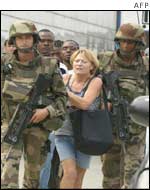
Under the power-sharing deal, President Gbagbo agreed to cede large powers to a government of national unity, including members of rebel groups. The Ivorian army has refused to accept the deal, saying it will not tolerate rebels in government - especially if those rebels are given key cabinet posts. Our correspondent says that, without the support of his army, it looking increasingly unlikely that the president will be able to implement the deal. On Friday, opponents of the agreement stormed the airport in Abidjan to prevent the arrival in Ivory Coast of the newly-appointed Prime Minister, Seydou Diarra. About 300 French citizens waiting to leave the country were trapped in the airport terminal by stone-throwing crowds and had to be protected by French troops. Mr Diarra remained in the Senegalese capital, Dakar, where West African leaders have been discussing the deal. They agreed to send mediators to Ivory Coast on Saturday to persuade Mr Gbagbo to implement the accord. Tight security Correspondents say that Saturday's rally, unlike other protests, has been peaceful. Security is tight in Abidjan's Plateau district, where the presidency is located.
A senior official from Ghana, which has just taken over the rotating presidency of the 15-nation Economic Community of West African States (ECOWAS) told the AFP news agency that six regional leaders were expected in Abidjan by the afternoon. He said the presidents of Ghana, Guinea-Bissau, Mali, Niger, Nigeria and Togo would press Mr Gbagbo to implement the accord, signed in Paris. The United States has added its voice, with White House spokesman Ari Fleischer saying the accord "must be implemented without delay to bring an end to the violence". The peace deal, agreed in Paris a week ago, was meant to end four months of violence by giving key government positions to rebels and Mr Gbagbo's political opponents. However, Mr Gbagbo's supporters say the deal is humiliating and limits his powers. France, the former colonial power in Ivory Coast, has advised all its non-essential nationals to leave. It has troops in the country to safeguard about 16,000 French nationals and to police the faltering truce. One French soldier was seriously hurt in Friday's disturbances. The conflict has split Ivory Coast along ethnic and religious lines. The rebels control the largely Muslim north, while the mainly Christian south, including Abidjan, remains in government hands. | |
See also:  31 Jan 03 | Africa 31 Jan 03 | Africa 31 Jan 03 | Africa 31 Jan 03 | Africa 28 Jan 03 | Africa 28 Jan 03 | Africa 25 Jan 03 | Africa Internet links: The BBC is not responsible for the content of external internet sites Top Africa stories now: Links to more Africa stories are at the foot of the page. | |||||||||||||||||||||||||||||||||||||||||||||||||||||||||||||||||||||||||||||||||||||||||||||||||||||||||||||||||||||||||||||||||||||||||||||||||||||||||||||||||||||||||||||||||||||||||||||||||||||||||
 | |
|  E-mail this story to a friend E-mail this story to a friend |
| |
| Links to more Africa stories |
| | | ||
 | ||||
 | | Back to top
| ||
| ---------------------------------------------------------------------------------- To BBC Sport>> | To BBC Weather>> | To BBC World Service>> ---------------------------------------------------------------------------------- © MMIII | News Sources | Privacy |





 We say no to rebels in our government. For us it would be like handing over to bandits the keys to your house