|
 |
 | | | | | | |||||||||||||||||||||||||||||||||||||||||||||||||||||||||||||||||||||||||||||||||||||||||||||||||||||||||||||||||||||||||||||||||||||||||||||||||||||||||||||||||||||||||||||||||||||||||||||||||||||||||||
| | | You are in: Africa | |||||||||||||||||||||||||||||||||||||||||||||||||||||||||||||||||||||||||||||||||||||||||||||||||||||||||||||||||||||||||||||||||||||||||||||||||||||||||||||||||||||||||||||||||||||||||||||||||||||||||||||
|
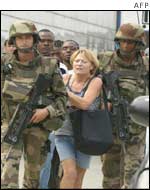
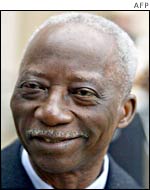
| | Friday, 31 January, 2003, 20:33 GMT Protests block Ivorian PM's return  French troops were called in to secure the airport The newly appointed prime minister of Ivory Coast has been forced to delay his return to the country because of unrest at the country's main airport. Seydou Diarra was obliged to remain in Senegal where West African leaders have been discussing the deal reached in Paris.
One French soldier was seriously hurt as forces intervened to contain stone-throwing crowds heckling some 300 French citizens waiting to leave the country. France - the main sponsor of the peace agreement designed to end the four-month conflict - has advised all non-essential French nationals to leave Ivory Coast.
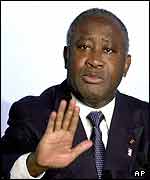
On Saturday six West African leaders are due to meet President Laurent Gbagbo in Abidjan to urge him to implement the accord. Mr Diarra had been due to start forming his government in Abidjan on Friday. But the thousands of protestors at the airport made clear they did not want him. "Never come back!" young men supporting President Laurent Gbagbo shouted. Crumbling agreement Like the main political opposition and most of the rebels, Mr Diarra is from the largely Muslim north of the country.
The demonstrators burnt the French flag and harassed French nationals trying to leave before being dispersed by French troops who have now secured the terminal. The BBC's Tom McKinley in Abidjan says the power-sharing deal reached in France last weekend is now on the verge of collapse. Opponents of the agreement say it humiliates President Gbagbo by diminishing his powers and reportedly giving rebels the key defence and interior ministries. The Ivorian military and most political parties have made clear they will not accept the rebels in the government. Our correspondent says Mr Diarra might not arrive from Senegal until Saturday - when the opponents of the agreement have planned an even bigger demonstration. Split country Some 16,000 French nationals are resident in Ivory Coast and some large companies earlier this week chartered planes to fly out the families of their staff.
"We advise those French nationals whose presence in Ivory Coast is not essential to leave the country," said French foreign ministry spokesman Francois Rivasseau. Some 2,500 French troops are monitoring a ceasefire line across the middle of the country. They were originally sent to protect French and other Western nationals in Ivory Coast. On Thursday the United Nations refugee agency said thousands of Liberians who had fled to Ivory Coast to escape the civil war in their own country have now asked for urgent help to return to Liberia. The agency said many Liberian refugees had been chased from their homes by Ivorians who accused them of siding with rebel groups. The conflict has split the world's largest cocoa producer along ethnic and religious lines. The rebels control the largely Muslim north, while the mainly Christian south, including Abidjan, remains in government hands. | |
See also:  31 Jan 03 | Africa 31 Jan 03 | Africa 31 Jan 03 | Africa 28 Jan 03 | Africa 28 Jan 03 | Africa 25 Jan 03 | Africa Internet links: The BBC is not responsible for the content of external internet sites Top Africa stories now: Links to more Africa stories are at the foot of the page. | |||||||||||||||||||||||||||||||||||||||||||||||||||||||||||||||||||||||||||||||||||||||||||||||||||||||||||||||||||||||||||||||||||||||||||||||||||||||||||||||||||||||||||||||||||||||||||||||||||||||||||
 | |
|  E-mail this story to a friend E-mail this story to a friend |
| |
| Links to more Africa stories |
| | | ||
 | ||||
 | | Back to top
| ||
| ---------------------------------------------------------------------------------- To BBC Sport>> | To BBC Weather>> | To BBC World Service>> ---------------------------------------------------------------------------------- © MMIII | News Sources | Privacy |





 We advise those French nationals whose presence in Ivory Coast is not essential to leave the country