|
 |
 | | | | | | |||||||||||||||||||||||||||||||||||||||||||||||||||||||||||||||||||||||||||||||||||||||||||||||||||||||||||||||||||||||||||||||||||||||||||||||||||||||||||||||||||||||||||||||||||
| | | You are in: Africa | |||||||||||||||||||||||||||||||||||||||||||||||||||||||||||||||||||||||||||||||||||||||||||||||||||||||||||||||||||||||||||||||||||||||||||||||||||||||||||||||||||||||||||||||||||||
|
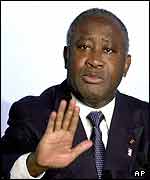
| | Thursday, 30 January, 2003, 01:51 GMT Peace hopes fade amid Ivorian turmoil  The president's supporters are deeply unhappy
It has been a turbulent week for Ivory Coast and may yet get worse. On Saturday, the country had peace within its grasp. A French-mediated peace deal had been signed and agreed in Paris. The negotiations were a picture of happiness. Then all of a sudden, on the crest of the wave, all talk of peace was dashed. Stay at home The violence began within hours of the deal being signed. On Saturday night, mobs of youths roamed the streets, ignoring a strict curfew, to vent their anger at the deal.
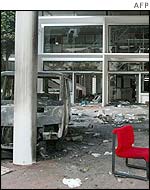
Overnight the strength of feeling multiplied. By Sunday morning tens of thousands of government supporters had taken to the streets of Abidjan, demanding that the peace deal be torn up. France, they said, had committed a 'constitutional coup d'etat' by encouraging the deal and it was to pay the price for treachery. Protestors besieged the French embassy in Abidjan - accusing the former colonial power of favouring the rebels with a deal that justified last September's uprising. There was a similar story at the French military barracks, on the outskirts of Abidjan. Relentless crowds of demonstrators were kept at bay with tear gas and stun grenades. But this only fuelled the anger. French businesses and schools were attacked and destroyed. At risk of attack, foreign embassies told their nationals to stay at home. Quiet Then all of a sudden the violence dissipated. An increasingly worried President Laurent Gbagbo told them to go home, promising to explain everything when the time was right. As if on cue, the army took up centre stage. But their act was anticipated.
Their first reaction to the peace deal had been to issue a statement of humiliation. They added some lines of support for the president and left it at that. After all, for the time being, no more was necessary. The protests on the streets were making their point and had already forced the president to change tack. Seeds of doubt Speaking to youth leaders in an effort to quell the protest, Mr Gbagbo referred to the peace accord as "proposals". The first seeds of doubt had crept into the peace process. The army's letter to the president came on Tuesday night. It said that: "The defence and security forces are in favour of a national reconciliation government, but energetically refuse the presence of rebels within a future government". President Gbagbo was being told that the very substance of the peace deal - power-sharing with the rebels - was unacceptable. Ultimatum or not, this may well have put the peace accord beyond redemption. The president is unlikely to try and implement the deal, without the support of his army. That would be political suicide. Foreboding But President Gbagbo is yet to make his intentions clear. His promise to address the nation remains firm but, for the time being, he is still deep in consultation with his advisors. Meanwhile the French Foreign Minister, Dominique de Villepin, who instigated the Paris peace accord, has urged Mr Gbagbo to respect his promise.
But clearly the prospects for peace now appear bleak. France, he said, is ready to evacuate its citizens "at any time" and is continuing to monitor the situation "by the hour". Hundred of French citizens are leaving anyway. But Air France has postponed its flights home � so French companies have had to charter planes to get employees and their families out. On Wednesday night, more than 250, mainly women and children, took the first of these back to Paris. One lady said that she thinks "things are going to get worse". "Now things are quiet," she added "it�s a good time to leave." Her sense of foreboding is not unique � in fact the whole country is on tenterhooks. Two evils The rebels don�t want fresh talks. A deal, they say, is a deal. So the president is in a seemingly impossible situation. If he keeps his promise and implements the deal he risks the wrath of his army. If he breaks it, he will prolong the conflict in Ivory Coast. His country is waiting anxiously to see which of these two evils he will choose. | |
See also:  29 Jan 03 | Africa 29 Jan 03 | Africa 28 Jan 03 | Africa 27 Jan 03 | Africa 25 Jan 03 | Africa 25 Jan 03 | Africa 20 Jan 03 | Africa 28 Jan 03 | Africa Internet links: The BBC is not responsible for the content of external internet sites Top Africa stories now: Links to more Africa stories are at the foot of the page. | |||||||||||||||||||||||||||||||||||||||||||||||||||||||||||||||||||||||||||||||||||||||||||||||||||||||||||||||||||||||||||||||||||||||||||||||||||||||||||||||||||||||||||||||||||
 | |
|  E-mail this story to a friend E-mail this story to a friend |
| |
| Links to more Africa stories |
| | | ||
 | ||||
 | | Back to top
| ||
| ---------------------------------------------------------------------------------- To BBC Sport>> | To BBC Weather>> | To BBC World Service>> ---------------------------------------------------------------------------------- © MMIII | News Sources | Privacy |