|
 |
 | | | | | | ||||||||||||||||||||||||||||||||||||||||||||||||||||||||||||||||||||||||||||||||||||||||||||||||||||||||||||||||||||||||||||||||||||||||||||||||||||||||||||||||||||||||||||||||||||||||||||||||||||||||||
| | | You are in: Africa | ||||||||||||||||||||||||||||||||||||||||||||||||||||||||||||||||||||||||||||||||||||||||||||||||||||||||||||||||||||||||||||||||||||||||||||||||||||||||||||||||||||||||||||||||||||||||||||||||||||||||||||
|
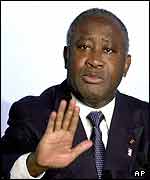
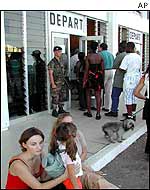
| | Wednesday, 29 January, 2003, 16:22 GMT Trouble mounts for Ivory Coast leader  The peace deal sparked riots in Abidjan Ivorian President Laurent Gbagbo faces more opposition to French-brokered peace accord aimed at ending the four-month civil war. Communications Minister Seri Bailly said the president should look for another way to solve the crisis.
Following attacks on French businesses, the former colonial power said that it is ready to evacuate its 20,000 citizens in Ivory Coast. The army and supporters of Mr Gbagbo have already criticised the deal, especially reports that the rebels would take over the defence and interior ministries. Mr Gbagbo has yet to address the nation to explain the deal, which was supposed to end the division of Ivory Coast between a rebel-held Muslim north and a Christian south in government hands. Both the commercial capital, Abidjan, and Agboville, the scene of ethnic clashes on Tuesday, are now reported to be calm. 'Humiliating' Mr Bailly said that an alternative needed to be found to the controversial peace accord. "Some aspects of the agreement are not accepted by the people here in Ivory Coast, so we have to think of new ways of finding a new compromise," Mr Bailly told the BBC's Focus on Africa programme.
The minister said that a defence minister coming from the rebels would not be able to command the military. "I'm wondering if the rebels who, by definition, do not respect discipline, can reorganise our army. "This is humiliating for them, and I don't even think it would be practicable... I don't think it will work." Mr Bailly said that although Mr Gbagbo may have meant well, he had made a mistake. "He probably thought it was a good solution. Now that we see that it's not a good solution, should we continue because the president said it, or should we help the president and the others find a better way of solving our problem, which is peace?" he asked. "The president has to listen to his people." Mr Gbagbo said at the weekend that the claims by the rebels that they would get the defence and interior portfolios were just rumours. But he has yet to deliver his eagerly-awaited address to the nation to clarify what was agreed in Paris last week. 'Awaiting evacuation' The renewed tension in Ivory Coast led the French Foreign Minister Dominique de Villepin to announce on Wednesday that France was ready to evacuate its nationals from Ivory Coast if need be. But Defence Minister Michele Alliot-Marie said that there were no immediate plans to proceed with an evacuation as calm had returned after Tuesday's violence.
Some 2,500 French troops are currently monitoring a ceasefire and the BBC's Mark Doyle says that if they were switched to help evacuate French citizens, Mr Gbagbo's position could be threatened militarily. A number of French companies in Abidjan said that they were preparing to evacuate 250 children and women ahead of the mid-term school holidays. Before Mr Bailly made his comments, Interior Minister Paul Yao N'dre was reported to have said in a speech on Togolese television that the deal was now "null and void". And former President Henri Konan Bedie has also said that the rebels should not be given the defence and interior portfolios. "These are decisions that were taken by the heads of state, by the great powers, to be more precise. The Ivorian political parties did not have their say in the matter," said the current leader of the former ruling Ivory Coast Democratic Party (PDCI). | |
See also:  29 Jan 03 | Africa 28 Jan 03 | Africa 28 Jan 03 | Africa 27 Jan 03 | Africa 25 Jan 03 | Africa 25 Jan 03 | Africa Internet links: The BBC is not responsible for the content of external internet sites Top Africa stories now: Links to more Africa stories are at the foot of the page. | ||||||||||||||||||||||||||||||||||||||||||||||||||||||||||||||||||||||||||||||||||||||||||||||||||||||||||||||||||||||||||||||||||||||||||||||||||||||||||||||||||||||||||||||||||||||||||||||||||||||||||
 | |
|  E-mail this story to a friend E-mail this story to a friend |
| |
| Links to more Africa stories |
| | | ||
 | ||||
 | | Back to top
| ||
| ---------------------------------------------------------------------------------- To BBC Sport>> | To BBC Weather>> | To BBC World Service>> ---------------------------------------------------------------------------------- © MMIII | News Sources | Privacy |





 The president has to listen to his people