|
 |
 | | | | | | ||||||||||||||||||||||||||||||||||||||||||||||||||||||||||||||||||||||||||||||||||||||||||||||||||||||||||||||||||||||||||||||||||||||||||||||||||||||||||||||||||||||||||||||||||
| | | You are in: Africa | ||||||||||||||||||||||||||||||||||||||||||||||||||||||||||||||||||||||||||||||||||||||||||||||||||||||||||||||||||||||||||||||||||||||||||||||||||||||||||||||||||||||||||||||||||||
|
| | Tuesday, 24 September, 2002, 16:47 GMT 17:47 UK Ugandan thieves steal Aids drugs 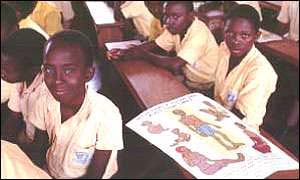 Uganda has won praise for educating people about Aids Police in Uganda have arrested 15 people after anti-Aids drugs donated by the US were stolen and then put on sale. The police said those arrested were health workers and businessmen. Nearly 300,000 tablets designed to treat Aids were donated to Uganda in February and distributed to health centres around the country.
The rate of mother-to-child transmission is estimated at 15-25% and access to effective treatment, including anti-retroviral drugs, is very limited. Sold to private clinics The medicines donated by the United States were sent to health centres across Uganda for free distribution to HIV/Aids patients.
The New Vision newspaper reports that the tablets, called Diflucan, were in bottles clearly marked "Donation Programme - Not For Sale". Many of the tablets were then stolen, with the alleged collusion of health workers, and passed on to private clinics for sale for at least two dollars each. When news of the scandal emerged last week, the Health Minister, Brigadier Jim Muhwezi, expressed shock and asked what donors would think. The theft and sale of the tablets was first recorded by the US drug company, Pfizer, which produced the tablets. The company informed the Ugandan Government, which then launched a police investigation, according to New Vision. The health minister said that the drugs had been sent to 110 health centres, but many had been stolen by "unscrupulous people". "This is very serious. It's a shame. "It's scary to imagine what people out there (donors), who are concerned about our suffering, think what type of people we are," the minister said. Uganda has the highest number of orphans in sub-Saharan Africa. An estimated 1.1 million children below the age of 15 years have lost a mother or both parents to Aids. The Aids epidemic in Uganda, combined with political violence in recent decades has reduced the life expectancy of economically active Ugandans from 48 years in 1990 to 38 years by 1997. The government has sought to coordinate Aids policy to reduce infection and fatality rates. | |
See also:  14 Sep 02 | Health 16 Sep 02 | Africa 03 Jul 02 | Business 02 Jul 02 | Health 21 Jun 02 | Africa 28 Nov 01 | Africa 27 Nov 01 | Africa Internet links: The BBC is not responsible for the content of external internet sites Top Africa stories now: Links to more Africa stories are at the foot of the page. | ||||||||||||||||||||||||||||||||||||||||||||||||||||||||||||||||||||||||||||||||||||||||||||||||||||||||||||||||||||||||||||||||||||||||||||||||||||||||||||||||||||||||||||||||||
| |
|  E-mail this story to a friend E-mail this story to a friend |
| |
| Links to more Africa stories |
| | | ||
 | ||||
 | | Back to top
| ||
| ---------------------------------------------------------------------------------- To BBC Sport>> | To BBC Weather>> | To BBC World Service>> ---------------------------------------------------------------------------------- © MMIII | News Sources | Privacy |