|
 |
 | | | | | | |||||||||||||||||||||||||||||||||||||||||||||||||||||||||||||||||||||||||||||||||||||||||||||||||||||||||||||||||||||||||||||||||||||||||||||||||||||||||||||||||||||||||||||||||||||||||||||||||||||||||||||||||||||||||||
| | | You are in: Africa | |||||||||||||||||||||||||||||||||||||||||||||||||||||||||||||||||||||||||||||||||||||||||||||||||||||||||||||||||||||||||||||||||||||||||||||||||||||||||||||||||||||||||||||||||||||||||||||||||||||||||||||||||||||||||||||
|
| | Monday, 2 September, 2002, 13:40 GMT 14:40 UK Mbeki demands summit action  Delegates have reached agreement in nearly all areas South African President Thabo Mbeki has opened the final phase of the world development summit in Johannesburg by urging leaders to take firm action on poverty and the environment. Mr Mbeki appealed to delegates to "set concrete goals and targets" to help developing countries and protect the planet.
Negotiators said on Monday they were close to a final deal on a package of measures after settling differences on climate change, trade and sanitation for the poor. After Mr Mbeki spoke, world leaders took to the podium to deliver five-minute addresses. More than 100 heads of governments and their representatives have gathered for the last three days of the World Summit on Sustainable Development.
Shortly before Zimbabwean President Robert Mugabe was due to speak, Namibian president Sam Nujoma accused Britain of creating one of the biggest problems in the region. "We here in southern Africa have one big problem, created by the British. The honourable Tony Blair is here, and he created the situation in Zimbabwe," Mr Nujoma told the forum. As world leaders took turns to speak, their ministers resumed negotiations on Monday morning to try to reach a final declaration by the official end of the summit on Wednesday. Disputes remain - particularly with the United States - over targets for boosting the use of clean forms of energy such as wind and solar power. Discussions are also stuck on a clause in the document referring to the provision of health services. The US and some of the more conservative countries have opposed any wording which could be seen to support the provision of family planning services - and in particular safe abortion - to poorer women in developing countries. 'Needless suffering' Mr Mbeki said that although illness, poverty and conflict were prevalent around the globe, the means to solve the world's problems already existed.
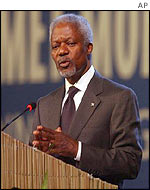
"Why do millions die every year from avoidable and curable diseases when sciences, technology and engineering have the means to save these human lives? Why do we have wars when we established institutions to end war?" he asked. His words were echoed by United Nations Secretary General Kofi Annan, who called on rich countries to "lead the way" towards saving the planet. "They have the wealth, they have the technology and they contribute - disproportionately - to global environmental problems," he said.
The secretary general said current methods of production which damage the environment and leave humans suffering had to be revised before they "prove to be a dead-end road for everyone". UK Prime Minister Tony Blair urged all countries to ratify the Kyoto agreement on climate change, warning that the world would face "catastrophe" if it failed to act. He also called on developed countries to open their markets - particularly agriculture - to developing countries. "Poverty damages the poor most but it also deprives the whole world of the benefits of the talents of poor nations and their people," he said. 'Weak document' Organisers had hoped that a complete package would be agreed before the leaders started addressing the summit.
One of the remaining stumbling blocks was resolved when the US agreed to accept a reduction in targets on the number of people left without access to proper sanitation. However, there is resistance from the US and oil-producing states to calls from the European Union for a timetable on increasing the use of renewable energy. South Africa's Foreign Minister, Nkosazana-Dlamini, told journalists on Sunday night the draft plan was not going to be a strong document. "To be honest, if you are negotiating with the world, you can't get everybody to accept a strong argument," she said. The eventual plan, which will be non-binding, will set the environmental agenda for the next 10 years. | |
See also:  02 Sep 02 | Africa 02 Sep 02 | Africa 02 Sep 02 | Politics 02 Sep 02 | Africa 31 Aug 02 | Africa 28 Aug 02 | Africa 28 Aug 02 | Africa 28 Aug 02 | Africa 27 Aug 02 | Africa 30 Aug 02 | Africa Internet links: The BBC is not responsible for the content of external internet sites Top Africa stories now: Links to more Africa stories are at the foot of the page. | |||||||||||||||||||||||||||||||||||||||||||||||||||||||||||||||||||||||||||||||||||||||||||||||||||||||||||||||||||||||||||||||||||||||||||||||||||||||||||||||||||||||||||||||||||||||||||||||||||||||||||||||||||||||||||
| |
|  E-mail this story to a friend E-mail this story to a friend |
| |
| Links to more Africa stories |
| | | ||
 | ||||
 | | Back to top
| ||
| ---------------------------------------------------------------------------------- To BBC Sport>> | To BBC Weather>> | To BBC World Service>> ---------------------------------------------------------------------------------- © MMIII | News Sources | Privacy |