|
 |
 | | | | | | ||||||||||||||||||||||||||||||||||||||||||||||||||||||||||||||||||||||||||||||||||||||||||||||||||||||||||||||||||||||||||||||||||||||||||||||||||||||||||||||||||||||||||||||||||||||||||||
| | | You are in: Africa | ||||||||||||||||||||||||||||||||||||||||||||||||||||||||||||||||||||||||||||||||||||||||||||||||||||||||||||||||||||||||||||||||||||||||||||||||||||||||||||||||||||||||||||||||||||||||||||||
|
| | Saturday, 31 August, 2002, 19:41 GMT 20:41 UK Slow march to Sandton 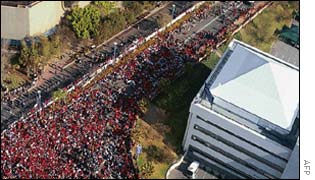 About 10,000 protesters took part
It was a lovely day for a demo - clear skies, a cool start which warmed up to about 25C, and a lot of people determined to make their point peacefully. They were a rag-tag army as they set out from Alexandra township to walk the eight kilometres (five miles) to Sandton.
Some banners were simple: "Stop evictions - fix our flats", read one. Others ranged from "Down with capitalism" to "Hands off Iraq". Range of causes There was a big pro-Palestinian section of the march, cries of "Amandla! Intifada!" mingling South Africa's own freedom struggle with the Middle East. There was a brutal directness about a few: "Osama, bomb Sandton", and "Mbeki, you bloody capitalist" were some of the milder ones.
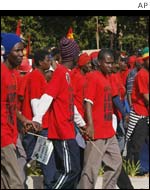
But it was only a warning to crews and snappers to dismount, so the march could start. In a place of honour on the truck rode a hero of the anti-apartheid struggle, Dennis Brutus, introduced as "an ancient lion". He was shot by the South African police in 1962, and spent years in exile. Good-natured protest Off we went, the marchers mostly black, mostly clad in the red T-shirts of the Anti-Privatisation Forum (APF) and the Landless People's Movement. But there were people of all colours, from across the world, and from across the spectrum of age.
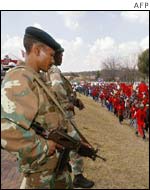
"We're here to protest about them privatising our electricity," one told me. "And we will protest." Further along the route, though, there were buses for the elderly. It was all good-natured as we walked through the unkempt streets of the township, past the tiny shacks where some are forced to live, the fetid pools of sewage and rubbish, and large crowds of bystanders, some supportive, most just looking bemused. Heavy policing The traditional "carnival atmosphere" then? No. There was a highly discordant note - a very heavy police presence throughout the length of the route. Most were armed, with batons, sidearms, shotguns or stun grenades, and sometimes a combination. A sight to amaze those who fought against apartheid were the hated Caspars, huge armoured vehicles topped by steel-helmeted soldiers manning machine guns. The Caspars used to roar into the townships and terrify the inhabitants at will. It looked as if they were ready to do exactly the same again.
Dusty roads and huts crowded hugger-mugger gave way to elegant business centres and residential blocks, sheltering behind iron gates, high walls and electric fences. There were trees - most in Alexandra have been chopped down for fuel. Getting fiery Three and a half hot hours after setting off, we reached the conference centre, protected by still more police, with water cannon, razor wire, and horses clad in visors and shin pads. It might have turned nasty here. There were some fiery speeches. John Apollis from the APF set the crowd roaring when he announced: "If the ANC Government don't deal with the poor and the landless, we'll do the same to them as we did to the apartheid government". Dennis Brutus said something he presumably never thought he would have occasion to say again: "We will continue to struggle until we are free." The speeches would not have sounded out of place in the Britain of 30 years ago. And perhaps that was what saved the day - as speaker vied with speaker to denounce imperialism, capitalism and the rest, the crowd gradually fell silent and began to trickle away. One woman, Monica Mabanga, was carrying a large model shark on a pole. She told me the shark was President Mbeki: "We want him to see how his policies are hurting us. He's selling us. But I'm thankful to the police, because they stayed peaceful." A policeman overhearing this, perhaps thankful the end was in sight, pointed to Monica and said: "You know she's Mrs Mbeki, don't you?" It can't have been a very good day for the president. The country's international visitors saw how people still live in places like Alexandra, and how the security forces are prepared to maintain control. One late result: Anti-Privatisation Forum 5, ANC Government 1 (own goal). | |
See also:  31 Aug 02 | Africa Internet links: The BBC is not responsible for the content of external internet sites Top Africa stories now: Links to more Africa stories are at the foot of the page. | ||||||||||||||||||||||||||||||||||||||||||||||||||||||||||||||||||||||||||||||||||||||||||||||||||||||||||||||||||||||||||||||||||||||||||||||||||||||||||||||||||||||||||||||||||||||||||||
| |
|  E-mail this story to a friend E-mail this story to a friend |
| |
| Links to more Africa stories |
| | | ||
 | ||||
 | | Back to top
| ||
| ---------------------------------------------------------------------------------- To BBC Sport>> | To BBC Weather>> | To BBC World Service>> ---------------------------------------------------------------------------------- © MMIII | News Sources | Privacy |