|
 |
 | | | | | | ||||||||||||||||||||||||||||||||||||||||||||||||||||||||||||||||||||||||||||||||||||||||||||||||||||||||||||||||||||||||||||||||||||||||||||||||||||||||||||||||||||||||||||||||||
| | | You are in: Africa | ||||||||||||||||||||||||||||||||||||||||||||||||||||||||||||||||||||||||||||||||||||||||||||||||||||||||||||||||||||||||||||||||||||||||||||||||||||||||||||||||||||||||||||||||||||
|
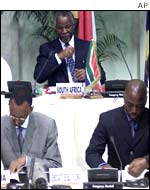
| | Wednesday, 31 July, 2002, 10:31 GMT 11:31 UK Rwandan rebels reject peace deal 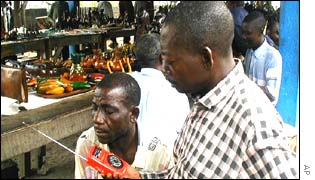 Congolese have reacted cautiously to the peace deal An organisation representing Rwandan Hutu rebels in the Democratic Republic of Congo has rejected the peace deal signed on Tuesday between DR Congo and Rwanda. The Democratic Forces for the Liberation of Rwanda (FDLR) told the BBC that they would not return voluntarily to Rwanda and would resist any attempt to "trample" on their rights.
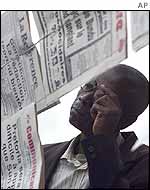
The United Nations force in DR Congo will then be asked to set up a programme for the repatriation of Rwandans in co-ordination with the two governments. Rwandan diplomats said before the signing that they wanted Rwandan Hutu rebels sent back to Rwanda or to the International Criminal Tribunal for Rwanda in Arusha, Tanzania. The peace accord was welcomed enthusiastically by South Africa, the United Nations Secretary General, the US State Department and the British Secretary for International Development, Clare Short. One of the leaders of the Rwandan-backed Congolese rebel group, the RCD, Bizima Karaha, said that the deal was "a good move". In Kinshasa, the BBC's Mark Dummett reported cautious hopes among Congolese about the prospects for peace. The main Kinshasa newspapers were similarly cautious and pointed to the likely opposition of the Rwandan Hutu rebels. Delaying manoeuvre The Rwandan rebel group, the FDLR, said in a statement sent to the French news agency, AFP, that it "has voluntarily agreed to stop fighting, to demobilise and disarm its fighters" in Kamina in eastern DR Congo.
But the statement rejected the peace deal and described it as a "delaying manoeuvre". An FDLR spokesman said they would remain opposed as long as Rwanda refused to withdraw its forces "unconditionally" from DR Congo. In an interview with the BBC, Christophe Hakizabera of the FDLR, denied that the Hutus in DR Congo had been involved in the Rwandan genocide and said they would not return to Rwanda because "[President] Kagame has not abandoned his policy of exterminating part of the Rwandan population". He said that even if disarmed they still had a "legitimate right to self-defence". "If they want to finish us, if someone wants to trample to our rights, to threaten our rights, we shall defend ourselves." The FDLR is allied to other groups representing Rwandan Hutus in Congo in the Alliance for Democracy and Reconciliation-Igihango
A positive note was struck by the Rally for Congolese Democracy (RCD) in its reaction to the signing. Bizima Karaha, the RCD security chief, told Reuters news agency that he believed the DR Congo Government had accepted through the deal that they had been "recruiting, training and arming" the Rwandan rebels and that they would now stop. "So we believe that this time, they will stop what they have been doing and they will contribute to resolve the problem," he said. UN support The UN has welcomed the commitment of the two governments to achieve peace. "The United Nations stands ready to support the implementation of the agreement and looks forward to discussing the practical modalities with the parties concerned," UN spokesman Fred Eckhard said on behalf of Kofi Annan.
Under the deal the UN force in DR Congo, Monuc, will collaborate in finding Rwandan rebels, disarming them and then finding the means to repatriate them. But the Kinshasa newspaper, La Reference Plus, says that signing the deal is one thing, putting it into practise, quite another. "Neither Kinshasa nor Kigali have the means to guarantee the implementation of this accord on the ground. "The exact number [of Hutu fighters in DR Congo] is one question, which the two capitals will have difficulty agreeing on," the paper said. | |
See also:  30 Jul 02 | Africa 31 Jul 02 | Africa 30 Jul 02 | Africa 29 Jul 02 | Africa 26 Jul 02 | Africa 23 Jul 02 | Africa 31 Jul 02 | Africa Internet links: The BBC is not responsible for the content of external internet sites Top Africa stories now: Links to more Africa stories are at the foot of the page. | ||||||||||||||||||||||||||||||||||||||||||||||||||||||||||||||||||||||||||||||||||||||||||||||||||||||||||||||||||||||||||||||||||||||||||||||||||||||||||||||||||||||||||||||||||
| |
|  E-mail this story to a friend E-mail this story to a friend |
| |
| Links to more Africa stories |
| | | ||
 | ||||
 | | Back to top
| ||
| ---------------------------------------------------------------------------------- To BBC Sport>> | To BBC Weather>> | To BBC World Service>> ---------------------------------------------------------------------------------- © MMIII | News Sources | Privacy |