|
 |
 | | | | | | |||||||||||||||||||||||||||||||||||||||||||||||||||||||||||||||||||||||||||||||||||||||||||||||||||||||||||||||||||||||||||||||||||||||||||||||||||||
| | | You are in: Monitoring: Media reports | |||||||||||||||||||||||||||||||||||||||||||||||||||||||||||||||||||||||||||||||||||||||||||||||||||||||||||||||||||||||||||||||||||||||||||||||||||||||
|
| | Tuesday, 17 September, 2002, 23:36 GMT 00:36 UK Maya build future on ancient traditions 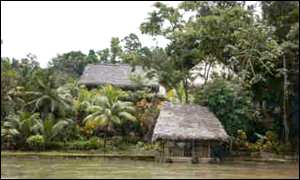 The Queqchi Maya fled to the rain forest during the civil war
In the jungle of eastern Guatemala, where the Rio Dulce flows into the Caribbean Sea, thousands of displaced Mayan indians are learning to adapt their ancient lifestyle to an alien and often hostile environment.
Ak Tenamit is teaching the Qeqchi, who fled their highland homes to escape the devastating civil war, how to create sustainable communities in the rain forest. Only since the signing of a peace agreement in 1998 have the Mayan indians been allowed to freely express their traditional cultural identity.
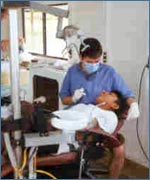
The project, one of many across the country, has expanded dramatically since it was founded in 1992. It now has a hospital, a floating dental clinic and a school that accommodates 600 children. It is also providing basic health care and education and building infrastructure such as drinkable water systems. At the local school, lessons are taught in Qeqchi - one of the 20 Mayan languages spoken in Guatemala - and in Spanish.
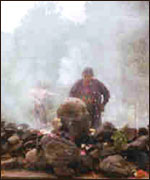
But at the same time, the Qeqchis are encouraged to abandon their traditional slash-and-burn farming techniques in favour of more sustainable agriculture, harvesting the resources of the rain forest. They are also being taught the skills to create traditional arts and crafts using local materials, part of efforts to attract eco-tourists into the region. Advanced civilization
The Maya flourished between around AD 250 - 900 creating an advanced civilisation across central America and the Yucatan peninsula, before collapsing suddenly and mysteriously. Today's Mayan indians still practise many of the ancient rituals and weave clothes with the old cosmological motifs. The project is also working to overcome the marginalisation of the Maya - who make up 60% of the population - within Guatemalan society.
The United Nations' representative for Indian peoples last week accused the Guatemalan authorities of doing too little to put an end to what he called "political and structural" discrimination and violence. At the heart of the project is the desire to create a new generation of community leaders able to improve the lives of people where they now live, rather than in far-away towns. Carlos Rigoberto Pop, one of the project co-ordinators, told BBC News Online: "We hope that by acquiring new skills close to their villages they will build a better future for themselves and their people, without ever losing their cultural identity." | | See also:  12 Sep 02 | Americas 19 Oct 02 | Science/Nature 15 Mar 02 | Arts Internet links: The BBC is not responsible for the content of external internet sites Top Media reports stories now: Links to more Media reports stories are at the foot of the page. | |||||||||||||||||||||||||||||||||||||||||||||||||||||||||||||||||||||||||||||||||||||||||||||||||||||||||||||||||||||||||||||||||||||||||||||||||||||
| |
|  E-mail this story to a friend E-mail this story to a friend |
| |
| Links to more Media reports stories |
| | | ||
 | ||||
 | | Back to top
| ||
| ---------------------------------------------------------------------------------- To BBC Sport>> | To BBC Weather>> | To BBC World Service>> ---------------------------------------------------------------------------------- © MMIII | News Sources | Privacy  |