|
 |
 | | | | | | |||||||||||||||||||||||||||||||||||||||||||||||||||||||||||||||||||||||||||||||||||||||||||||||||||||||||||||||||||||||||||||||||||||||||||||||||||||||||||||||
| | | You are in: Business | |||||||||||||||||||||||||||||||||||||||||||||||||||||||||||||||||||||||||||||||||||||||||||||||||||||||||||||||||||||||||||||||||||||||||||||||||||||||||||||||||
|
| | Monday, 17 June, 2002, 17:05 GMT 18:05 UK Analysis: France's economic challenge The French economy is robust, but worryingly inefficient
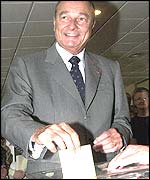
For some months now, France has been in an unusual position: its economy, long sneered at by leaner Northern neighbours, has been the most robust in Europe. Odd then, that the election of a new, market-oriented government has met such a grudging welcome in the business pages. Even on the right, media pundits have preferred moodily to stress the enormous workload facing the government of President Jacques Chirac and Jean-Pierre Raffarin, his prime minister, rather than glorying even momentarily in their victory. By banging on about the faults of the previous administration, Messrs Chirac and Raffarin may simply have succeeded in undermining everyone's confidence in the French economy. They have little time to rebuild it. Big talk Be that as it may, the new government is brim-full of gutsy economic promises: Mr Raffarin is rushing around talking about "time for action".
But France's current malaise, the new government claims, is not macro-economic so much as structural. The dynamic duo are hoping to tackle the underlying inefficiencies that they see holding the French economy back; inefficiencies that could end up relegating France into the slow lane of Europe. Nips and tucks Among a raft of impressive but often vaguely-worded government promises are:
Built on sand The question of whether any or all of this can be achieved is largely political. On the face of it, the new government enjoys the rare treat of controlling all the major centres of power, and with a popular mandate unsurpassed in recent years.
They will be watching closely for any turnaround in unemployment, still lingering around 9% despite the almost frantic tinkering of the previous government. But they may not be able to stomach too radical a reform programme: French voters have a history of sometimes violent protest, most recently in 1995, when then-Prime Minister Alain Juppe was ousted after trying - and failing - to reform the pension system. Home and away Nor is the domestic audience the only source of conflict. Before the end of this week, new Economy and Finance Minister Francis Mer is due to attend a European summit, where he will have to admit that he does not have the data to answer tough questions about the French budget. France's European partners are becoming increasingly worried about government spending, after Mr Chirac suggested France may not balance its budget until 2007, rather than the 2004 goal it had previously set itself. Tax cuts may help keep voters sweet at home, but will not play well in Brussels, especially after Germany and Portugal descended into public squabbles over budgets last year. Time ticks by The new regime has, in theory, five years to make its mark. But some commentators are already arguing that concrete results will have to be felt within six months. At this stage, that looks like an impossibly steep timetable: for all its eventual failure, the previous Socialist government changed a great deal in the fabric of the French economy - even starting to unravel those policies will be fiddly enough, without worrying about launching news from the right. Everything, then, depends on the patience of the French voter - not just Chirac supporters, but the voiceless rump so neatly alienated by the political establishment. They may not remain voiceless for long. | |
See also:  17 Jun 02 | Europe 17 Jun 02 | Europe 16 Jun 02 | Europe 17 Jun 02 | Europe 16 Jun 02 | Europe 16 Jun 02 | UK Politics 10 Jun 02 | Europe Internet links: The BBC is not responsible for the content of external internet sites Top Business stories now: Links to more Business stories are at the foot of the page. | |||||||||||||||||||||||||||||||||||||||||||||||||||||||||||||||||||||||||||||||||||||||||||||||||||||||||||||||||||||||||||||||||||||||||||||||||||||||||||||||
| |
|  E-mail this story to a friend E-mail this story to a friend |
| |
| Links to more Business stories |
| | | ||
 | ||||
 | | Back to top
| ||
| ---------------------------------------------------------------------------------- To BBC Sport>> | To BBC Weather>> | To BBC World Service>> ---------------------------------------------------------------------------------- © MMIII | News Sources | Privacy |