
|
 |
 | | | | | | |||||||||||||||||||||||||||||||||||||||||||||||||||||||||||||||||||||||||||||||||||||||||||||||||||||||||||||||||||||||||||||||||||||||||||||||||||||||||||||||
| | | You are in: Middle East | |||||||||||||||||||||||||||||||||||||||||||||||||||||||||||||||||||||||||||||||||||||||||||||||||||||||||||||||||||||||||||||||||||||||||||||||||||||||||||||||||
|
| | Sunday, 24 November, 2002, 09:07 GMT Media mulls ban on Iraqi daily  Uday Hussain's paper is off the newsstands The one-month ban slapped on the newspaper run by Saddam Hussein's eldest son Uday has provoked comment across the Arab world. Journalists working for the daily Babil told the London-based Arabic newspaper Al-Sharq al-Awsat that they were "surprised" at the order to close the paper's offices. But the Arab satellite TV channel Al-Jazeera cites an unnamed Iraqi official who says that Babil's attacks on Arab states which maintain links with Israel have contributed to the decision to close the paper. And the Egyptian news agency Mena agrees. Insults "Strict instructions were given to the Iraqi newspapers to stop any media campaigns against Arab countries, including Kuwait and Saudi Arabia following the Beirut summit last March," Mena explains.
The article reports fighting between Jordanian forces and Islamists in the southern city of Ma'an. The decision to shut down Babil was taken on 19 November, shortly after this report was published. List of honour The paper also published a list of senior officials compiled by Iraqi opposition activists, under the headline "Honour List". "This is a list of the henchmen of the regime. Our hands will reach them sooner or later," the paper said. Some of the individuals named as "intelligence officers" on the list are serving diplomats and one figure is described as having links to Al-Qaeda. This is not the first time that Babil has broken the conventions of Iraq's state-run press. Repeat offender In July, the paper argued that the Iraqi government was wrong to try and prevent Al-Jazeera's correspondent from working in Iraq.
A previous clash with the Ministry of Information also resulted in the paper's suspension. In August 1996, the paper questioned the ministry's performance without giving space for an official reply. In response, the government ordered Babil to close for four days. The London-based Arabic Internet daily, Elaph argues that Babil's "relative freedom" compared to the rest of the Iraqi press has allowed the paper to present itself as an internal critic of Saddam Hussein's regime. "It took to criticizing the performance of the Iraqi government and officials to the point that some observers categorised it as standing to the left of the regime and leading the 'new generation's thinking' inside Iraq," Elaph says. But Babil's suspension will not deprive Uday Hussein of an outlet for his views. His network of media organisations includes Youth TV and 16 other weekly and monthly publications. BBC Monitoring, based in Caversham in southern England, selects and translates information from radio, television, press, news agencies and the Internet from 150 countries in more than 70 languages. | | See also:  20 Oct 98 | Middle East 28 Mar 00 | In Depth 14 Nov 02 | Middle East Internet links: The BBC is not responsible for the content of external internet sites Top Middle East stories now: Links to more Middle East stories are at the foot of the page. | |||||||||||||||||||||||||||||||||||||||||||||||||||||||||||||||||||||||||||||||||||||||||||||||||||||||||||||||||||||||||||||||||||||||||||||||||||||||||||||||
 | |
|  E-mail this story to a friend E-mail this story to a friend |
| |
| Links to more Middle East stories |
| | | ||
 | ||||
 | | Back to top
| ||
| ---------------------------------------------------------------------------------- To BBC Sport>> | To BBC Weather>> | To BBC World Service>> ---------------------------------------------------------------------------------- © MMIII | News Sources | Privacy |





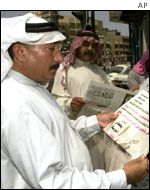
 Babil has relative freedom compared to the rest of the Iraqi press