|
 |
 | | | | | | ||||||||||||||||||||||||||||||||||||||||||||||||||||||||||||||||||||||||||||||||||||||||||||||||||||||||||||||||||||||||||||||||||||||||||||||||||||||||||||||||||||||||||||||||||||||||||||||||||||||||||||||||||||||||||||||
| | | You are in: Middle East | ||||||||||||||||||||||||||||||||||||||||||||||||||||||||||||||||||||||||||||||||||||||||||||||||||||||||||||||||||||||||||||||||||||||||||||||||||||||||||||||||||||||||||||||||||||||||||||||||||||||||||||||||||||||||||||||||
|
| | Thursday, 14 November, 2002, 15:37 GMT Saddam's son steps into debate  Uday warns Iraq may strike first
It reveals that Iraq tried to use commercial deals and even bribery to head off the United Nations Security Council resolution which was passed on 1 November.
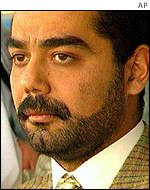
Uday calls on Arab states to impose an oil embargo on countries which attack Iraq and says that Iraq might strike first. Uday Hussein is Saddam's elder son. He is a flamboyant character who does not necessarily reflect his father's views. Indeed, the younger son Qusay is generally thought to be made more in Saddam Hussein's image and to be his political favourite. But Uday's opinions are tolerated in the highest circles and gain wider circulation through his own newspaper Babel, which has published his letter to the assembly in full. Buying votes He complains that certain countries did not help Iraq even though they were favoured commercially. The letter says: "All the deals which we signed with countries like Russia - whose agreement was dubbed the deal of the century - were for political influence. The economic side was used to influence the political side".
He accuses such countries of playing a "game" with Iraq. China, for example, he says was more influenced by its trade with the United States which "we cannot beat". He laments: "Although we dealt with China, this country did nothing." The effort apparently even extended to the individual level. "We know that a certain share of the deals went to this or that country to please some foreign minister who owned the companies or to some prime minister or head of state who also owned companies," the paper says. He does not give any names. Diplomats targeted The accusations and exasperation show some of the tactics Iraq has been using. Indeed, Uday suggests a switch of plan "to Western companies and not states like France and Russia". Maybe these would have more influence, he suggests. He even proposes doing business with "Democrats and Republicans opposed to government policy" in the United States.
And he wonders if more effort should have been made to influence Britain: "Let us suppose that that (a percentage) of what we gave had gone instead to the English? What would its impact have been?" Perhaps sensibly, he does not give an answer. The letter goes on to concede that the UN resolution would have to be accepted, as his father subsequently announced. "As the Arabic saying goes: Your brother was compelled and not given a choice," writes Uday. But he also indicates that Iraq is not ready to act submissively. He calls for Arab inspectors to be included on the inspection teams and reaches a conclusion rightly or wrongly about American intentions: "He announced clearly that the UN resolution does not stop his military action". Arab solidarity call This leads him to propose that there should be a period of "diplomacy" during which Iraq could improve its position. He says that Arab countries should announce that they will cut off oil immediately from any state which attacks Iraq or which allows the use of its bases. Arab countries should not allow the passage of weapons through their waterways or airspace. There should be demonstrations in the streets of Arab cities, he says, complaining that so far, these protests have not been as big as ones elsewhere in the world. But if this approach does not work, he concludes, then Iraq should strike first. Unlike the Gulf War of 1991 when "we were not the ones to fire the first bullet", Iraq might this time have to "take the initiative in rejection and armed offensive against the quarter that harbours evil for us", he says. "We must not wait for the arrows to be fired in our direction and fended by our shields. We know that the Americans are cowards, treacherous and mean hyenas. We must deprive the mean ones of any opportunity". | |
See also:  13 Nov 02 | Middle East 10 Nov 02 | Middle East 13 Nov 02 | Middle East 28 Mar 00 | In Depth 20 Oct 98 | Middle East Internet links: The BBC is not responsible for the content of external internet sites Top Middle East stories now: Links to more Middle East stories are at the foot of the page. | ||||||||||||||||||||||||||||||||||||||||||||||||||||||||||||||||||||||||||||||||||||||||||||||||||||||||||||||||||||||||||||||||||||||||||||||||||||||||||||||||||||||||||||||||||||||||||||||||||||||||||||||||||||||||||||||
| |
|  E-mail this story to a friend E-mail this story to a friend |
| |
| Links to more Middle East stories |
| | | ||
 | ||||
 | | Back to top
| ||
| ---------------------------------------------------------------------------------- To BBC Sport>> | To BBC Weather>> | To BBC World Service>> ---------------------------------------------------------------------------------- © MMIII | News Sources | Privacy |