
Last updated: 5 october, 2010 - 16:22 GMT
BBC Russian tours Siberia’s universities
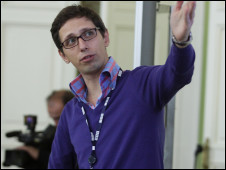
Dmitry Shishkin giving a talk on multiplatform journalism and audience habits
Managing editor of BBC Russia Dmitry Shishkin explains the motivations behind visiting students in one of Russia’s remotest regions to share and discuss the editorial values of BBC journalism.
The idea of touring the journalism faculties of Russia’s best universities came to us some time ago when we launched the Russian version of the BBC College of Journalism (CoJo) site through bbcrussian.com.
As a former Moscow State University journalism graduate, I know how valuable lectures from practising journalists ‘from the real world’ are for students.
Last spring, a BBC Russian team visited Moscow, St Petersburg, the Urals city of Yekaterinburg, and Voronezh in the southern Russia.
The turnout of students was much more than we expected and they really engaged with topics such as the BBC’s editorial guidelines, how to deal with anonymous sources, changing audiences, social media and citizen journalism.
It was exciting and rewarding to be able to talk to so many young journalists about what BBC Russian Service does and how it works, and about the principles of BBC journalism.
BBC Russian Editor Dmitry Shishkin
They particularly enjoyed separate presentations on Learning English resources available through the BBC.
Another highlight was producing a live edition of our interactive programme Vam Slovo (Have Your Say) from each location.
Vibrant change
This September we decided to go beyond the Urals and head for Siberia.
The team went to Novosibirsk, the third largest city in Russia, and to Tomsk.
This was only my second time in Siberia, having last visited 15 years ago. The last time I was in Novosibirsk, as a student journalist in the mid-1990s, it looked very different.
The city, right in the centre of Russia, with a six-hour time difference to London, is now vibrant. Its central squares and wide prospects making a real impression on the team. The passion with which the live Vam Slovo audience discussed Siberia’s role in modern Russia was very interesting.
Modern realities
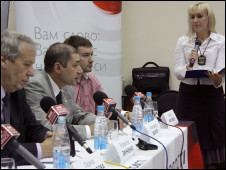
Anna Dementieva presents interactive show Vam Slovo (Have Your Say), which discussed 'brain drain' in Tomsk and Siberia's role in Russia's future in Novosibirsk
In Tomsk, on old merchant town transformed into a distinguished academic and educational centre, the audience discussed another issue – ‘brain drain’.
This topic is close to the hearts of locals because of the many scientists working here.
Many contrasted the government’s focus on ‘modernisation’ with the reality that left many of them looking for work in bigger Russian cities or overseas.
Student club
As well as the two live programmes, we provided the masterclasses with an additional element especially aimed at the journalism student community.
Together with Livejournal – the largest blogging platform in Russia – we now have a community called BBC Student Club, for student journalists who want to know more about the BBC and have the chance to pitch story ideas.
BBC Russian publishes CoJo and English Language Training content to the community and students send us their ideas.
The idea of BBC Student Club – which as I write has 600 members and growing – sprang from our earlier tours and the aim is to find and develop the best of students so that we may find some more interesting stories from all across Russia and, who knows, maybe then help them with their journalistic careers.
Questions of value
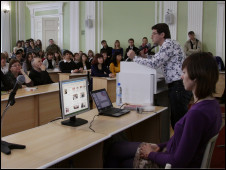
Evgeny Vlasenko talks about BBC Russian Learning English teaching modules to university students
It was exciting and rewarding to be able to talk to so many young journalists about what BBC Russian does and how it works, and about the principles of BBC journalism.
We discussed with many whether these ought to be normal editorial values for any media outlet. And it was nice to hear that a lot of them were asking the same question throughout the week – how to start working for the BBC.
It was so special to visit a part of Russia that feels a long way away, but also to contact the two cities and see that the concerns of people living there are similar to other parts of Russia.
Visit bbcrussian.com by clicking click
here and the BBC College of Journalism by clicking click
here
Also on World Agenda
BBC World Service highlights



BBC iD
BBC iDBBC navigation
BBC links

BBC © 2014The BBC is not responsible for the content of external sites. Read more.
This page is best viewed in an up-to-date web browser with style sheets (CSS) enabled. While you will be able to view the content of this page in your current browser, you will not be able to get the full visual experience. Please consider upgrading your browser software or enabling style sheets (CSS) if you are able to do so.
