
Last updated: 1 september, 2010 - 12:55 GMT
Tales behind the world's favourite songs
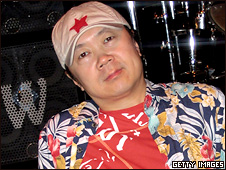
Cui Jian: China's 'godfather of rock'
BBC World Service producer Emma Wallis talks about interviewing some of the biggest names in world music as part of Newshour's Striking a Chord series.
When my editor asked me if I'd like to produce a series talking to singer/songwriters about the stories behind their songs, I jumped at the chance. What better way to spend the summer than to be talking to some of the world's best-known musicians.
We started the process back in May, consulting colleagues and friends about which songs and musicians struck chords with them.
Many cited Leonard Cohen, Bob Dylan and the Beatles – I bid for interviews with them all, but to no avail.
As it turned out, the highlight of the series for me was discovering musicians that I had never heard of before, but who were huge stars in their own countries.
Musicians such as the Chinese 'godfather of rock' Cui Jian, who wrote a love song which became the anthem for students during the Tiananmen square protests, or the Iranian underground band Kiosk.
Stuff of dreams
Each musician, whether I met them in person in London or via telephone to a far-flung studio around the world, was captivating and inspiring.
Natalie Merchant broke down in tears as she recounted the effect her song Wonder had had on her audience and, in turn, upon her own life.
Arash Sobhani talked about how he'd spent six months composing Love of Speed, walking around with a notebook in hand, writing down phrases which struck him as paradoxes.
Everyone had a song which struck a chord with them and my colleagues would stop by my desk every now and then to tell me a story about the song which they wanted to nominate.
That's the way I found out that the Beatles' Yesterday was dreamt up by Paul McCartney one night and, for the first few weeks of its life, according to one of his biographers, it was hummed along using the words 'Scrambled eggs, I love your legs'.
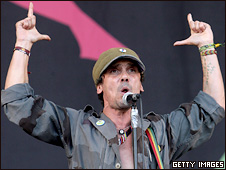
French singer Manu Chao
Bids come through
After weeks of waiting, some of the biggest bids - K'Naan, Tracy Chapman and Manu Chao - said yes, and joined the likes of Femi Kuti, Angelique Kidjo and Russia's answer to Bob Dylan, Boris Grebenshikov, to make the series a really big draw.
It was at that point that I really started to enjoy making the programme. What I learned was that for a song to strike a chord, it first has to do so with the artists themselves, but also speak about universal themes - love, pain, loss or revolution for instance.
The musicians manage to capture the gamut of human experience - the happiness, sadness and fun of life in a few words, a turn of phrase or a haunting melody.
Finishing the series, I still find it difficult to say which story is my favourite, as I came to love each tale behind every piece of music for different reasons.
- Striking a Chord was broadcast on BBC World Service's Newshour. click Click here to listen to the series.

BBC World Service highlights



Other links
Contact us
Related links
Elsewhere on the web
BBC iD
BBC iDBBC navigation
BBC links

BBC © 2014The BBC is not responsible for the content of external sites. Read more.
This page is best viewed in an up-to-date web browser with style sheets (CSS) enabled. While you will be able to view the content of this page in your current browser, you will not be able to get the full visual experience. Please consider upgrading your browser software or enabling style sheets (CSS) if you are able to do so.
