
 | |
 | |
 | | | | |||||||||||||||||||||||||||||||||||||||||||||||||||||||||||||||
| 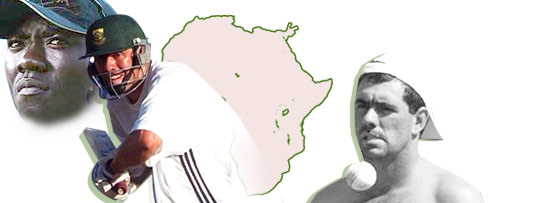 From Apartheid to world dominance In Africa, cricket has never been spared from politics since its early days. Just a couple of decades ago, it was confined only to the white population in South Africa, in line with the then government’s Apartheid policy. Highly talented players like Graham Pollock, who was regarded as the best batsman in 1971, and Barry Richards were made “redundant” as a result of the International ban due to Apartheid.
During this time though there were so called “rebel tours”. Breakaway teams from England, Australia, the West Indies and Sri Lanka came to play “unofficial test matches”. However they were highly criticised and even banned by the national authorities. While Graham Gooch led the English “rebel” team, Archbishop Desmond Tutu led the fight against the Apartheid regime in South Africa. With the collapse of the Apartheid regime, cricket was readmitted to the international arena, with the birth of the new South Africa. Omar Henry became the first ever black South African to play for the country when they met Sri Lanka in the 1992 World Cup. It was in 1994 that new South Africa returned to play Test cricket in England at Lords under skipper Kepler Wessells.
Multi-racial South Africa is today seen as the one of the strongest teams in the world. Within the last decade they have recorded a series of wins over every Test playing nation, apart from Australia. There have been defeats too during the last ten years. Hansie Cronje, long regarded as an icon of the “gentlemen’s game” was banned for life following an inquiry into match fixing. Zimbabwe Zimbabwe played its first ever Test match in 1992, two years before south Africa entered the game after isolation. Despite heavy loses in the beginning, it took them only two years to record their first ever win. In 1998, Zimbabwe recorded a first series win over Pakistan. This remains the highlight of their short Test history. Zimbabwe too, were not spared from politics. President Robert Mugabe is accused of human rights abuses and intimidating political opponents, some leading cricket playing nations and cricketers too, are trying to use cricket as an influential tool against him. Kenya
Few predicted Kenya would reach the semi-finals. They even defeated Test playing nations like Sri Lanka and Bangladesh on their courageous way towards the semi-final. Kenya will join the “elite” club of Test playing nations by 2005 becoming the eleventh member after Bangladesh. Barry Richards presents the African episode of the "Story of Cricket".
| |||||||||||||||||||||||||||||||||||||||||||||||||||||||||||||||||
| |||
| | | |
| |||
 | ^^Back to top | | |


