 | | | | | | | ||||||||||||||
| | |||||||||||||||||||
Harare's Book Café - bastion of free speech | ||||||||||||||||||||
The creative director of a café in Zimbabwe where it is still possible to say what one thinks has spoken to Outlook. Paul Brickhill started the Book Café in Harare in 1997 as a place where artists of every discipline can gather to play music, sing, read poetry and display drawings and paintings. And, while freedom of speech has been curbed in other parts of Zimbabwe, the café has recently celebrated its 10th-anniversary. "The humour, the jokes, the sense of fun is really extraordinary," he told Outlook presenter Adam Mynott, "Every difficulty is turned into a joke. People laugh and laugh there - laugh out loud really." Speaking from outside Zimbabwe, Brickhill said that conditions have become more and more difficult recently. "I'm in constant contact with Harare daily," he said, "And the kind of messages, emails or phone calls I get are literally 'no meat, no supplies, no fuel, spare parts are hard, we need a generator desperately, water was cut off yesterday, we had a visit from the police last night.' "It's that kind of thing. It's very stressful."
Yet, while the authorities have cracked down on newspapers and other establishments, they have let the Book Cafe stay open - although the artists themselves do sometimes moderate what they say. "Our principle is that absolutely no censorship will be allowed at a Book Café event," said Brickhill. "But the issue of self-censorship is pervasive - it's at the back of every artist's mind. 'Is this something that's going to get me into trouble and, if so, how should I express it?'" Under the Public Order Security Act, the Book café have to provide names of speakers in discussions and explanations as to why they want these discussions to take place. And Brickhill is aware that the café is under constant scrutiny. "We do get harrassed. We do get bullied," he said, "And to be honest there's a history of this... This isn't something that started a few days ago. "I would say from the beginning there has been a mistrust of the arts in its free-est sense by a certain section of the government, of the ruling party or the authorities." But he and the people who work there are determined that the Book Café should stay open. "We're very determined people and we're very passionate about the Book Café," he said, "We just don't know how to give up. "We are certainly under pressure. We certainly have difficult, stressful lives. We keep going because Zimbabwe is going to come out this. "We think this is a phase - an extraordinarily difficult phase that our country is going through but the solutions are going to come." | ||||||||||||||||||||
| ||||||||||||||||||||
| ||||||||||||||||||||






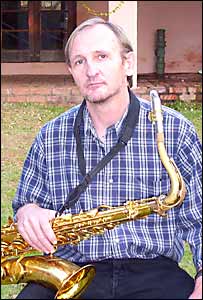
 Listen to Paul Brickhill on Outlook
 We're very determined people and we're very passionate about the Book Café. We just don't know how to give up.
 Contact Outlook