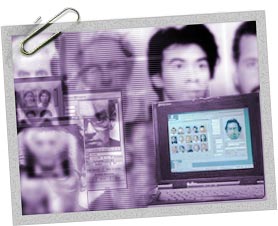
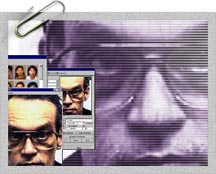
| | | | |  | |  | Facial mapping has helped investigators hunt offenders |  | | |  |
| | | | | Child crimes:
The hunt for victims
Police trying to identify children in photographs circulated by the so-called Wonderland Club paedophile ring, stepped up their hunt by employing a technique known as "facial mapping".
This technology has proved to be an effective method of identifying children and offenders.
With parents or guardians provide police a photographic portrait. It is scanned in to an international database of child portraits, taken from paedophilic images that have been seized.
Although children's faces appear to change dramatically over the years there are certain points that remain the same throughout life.
The advanced biometric-based software applications match these defining points to a newly scanned image of a face, even if the paedophilic image was taken many years previously.
In 2002, G8 countries formed an agreement to maintain this database at Interpol headquarters in Lyons, France.
Detective Superintendent Peter Spindler, who worked closely on the Wonderland operation, told the BBC, "it is our intention, as the owners of the world's largest collection of paedophilic data to deliver the international solution to this problem." | | 
A database of paedophilic images is maintained by Interpol | |
|






 ^^ Back to top