 | | | | | | 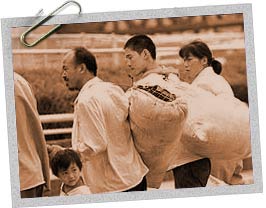 | | | Many migrant workers travel to the cities in search of a job | |
| | | |  | | | | | | | | Illegal travel:
• Because they travel illegally, there are no precise numbers for those who have left China bound for the world's big cities.
• It is estimated that 200,000 have made the perilous and expensive journey to the United States in the last 20 years. | |
| | |  |
| | |  | | | Human trafficking:
The destination
People travel the world looking for work. They get into debt in order to cross borders and continents in the hope of earning better money in a new country.
In Florida, around the town of Immokalee, workers from Guatemala, Mexico and Haiti pick tomatoes and oranges, working for contractors who sell the produce on to the big fast food and retail companies.
Having paid to cross the border, they then pay again to get a ride to Florida where the work is. Before they get to work they are already in debt.
Once they arrive they live in appalling conditions. Laura Germino, who works for the Coalition of Immokalee Workers, a local grass roots union, told BBC World Service of a local labour camp, with its rows of trailers, people living 12 to 14 in a trailer.
"They really have nothing in them, no furniture, just a few burners and minimal bath facilities. They are so hot inside they are like a cauldron."
It's a harsh life. "You pick all day long, as much as you can for 40 cents a bucket, which is the same price as they paid in 1978," Germino said. Wages are so low in Florida you have to pick two tonnes of tomatoes to earn US$50.
"And then you get home and have to wait in line for the burners, wait in line to eat, wait in line for a shower, and then you sleep in this hot tin box."
For the trailer, the hot tin box, the workers will pay between then a rent as high as US$1,200 a month, the sort of money that would get you a decent apartment in a better area. But they have no choice about where they live - they have to be near the contractors' buses, and that means the trailer camp.
"These are sweatshops in the fields," Laura Germino said. "You don't have to move your factory to a third world country. The people come here to you."
| | next > |  | |
|




 ^^ Back to top


