The BBC is not responsible for the content of external internet sites
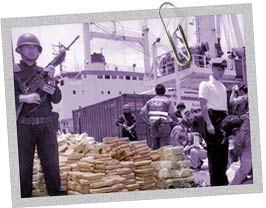
Specially trained customs officers search boats. They thrust poles through internal pipes, send dogs down to difficult areas in the engine rooms and investigate places that have been recently welded, new paintwork or cement, which are all signs of storage possibilities for large amounts of cocaine.
Concealing drugs behind new panels is recognised by the US Customs as skilled work and those responsible are often given the prestigious job title of "narco-welders".
Methods and styles of smuggling drugs from the supply countries in Latin and South America and the Caribbean vary.
In addition to the freighters, small aircraft and boats drop waterproof parcels of drugs in to the sea a few miles off the Florida shores in to the Gulf of Mexico, Florida Bay or the Atlantic.
Awaiting go-fast boats speed in and collect the drugs from the sea bringing them back to couriers on the US mainland.
US Customs have increased interstate powers so that some sense can be made of America's fragmented landscape of law enforcement where 18,000 separate agencies are involved with policing.
Often police work on drugs extends to helping neighbouring and source countries with practical assistance. Training is also given to commercial companies on how to deal with freight so that goods are safer from interception by traffickers.





 ^^ Back to top