
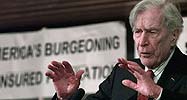
James K Galbraith won worldwide renown as a liberal economist
As the world's financial markets began to turn down, many leading economists spoke to the BBC about the credit crisis and what it means for global finance.
James K Galbraith talks about his father's interpretation of events leading to what is considered the anniversary of the Wall Street Crash of 1929.
Listen
Listen to James K Glabraith (4 mins 38 secs)
Nobel prize-winning economist Paul Krugman gave his take on the situation - and explained how bad things are likely to get:
Listen Listen to Paul Krugman (5 mins 41 secs)
Director General of the World Trade Organisation, Pascal Lamy, predicts the effect the ongoing crisis will have on trade - the engine of the global economy:
Listen Listen to Pascal Lamy (3 mins 30 secs)
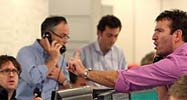
How have the world's traders got into such a mess?
Gillian Tett, Asia expert for London's Financial Times, says governments are being urged to learn the lessons of the Japanese economic collapse in the 1990s:
Listen Listen to Gillian Tett (1 min 40 secs)
Business correspondent Alex Ritson explains the key role that Credit Default Swaps have had in generating financial panic:
Listen Listen to Alex Ritson (1 min 40 secs)
Africa editor Martin Plaut looked at the how the world's poorest continent, Africa, will be affected by the global financial crisis:
Listen Listen to Martin Plaut (9 mins)
Professor Alec Chrystal looks at how the stock market functions - and why we need it:
Read Alec Chrystal on BBCNews.com
And Michael Blastland, author of the book The Tiger That Isn't: Seeing A World Of Numbers, explains how bubbles are made - and why we are always doomed to see them burst:
Read Michael Blastland on BBCNews.com
And you can read the latest thoughts of the BBC's business editor Robert Peston on his blog here:

