
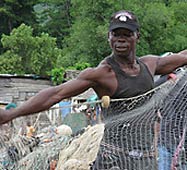
Sierra Leone is one of the world's poorest countries
Many people know that the world's fish stocks are running out.
But less well known are the reasons behind this. Illegal fishing not only threatens the world's fish, but also affects the lives of coastal communities all over the world. It's not just an environmental story - but it's about poverty.
And the fact is that an industry which could be bringing in millions of dollars to help the world's poorest is often pushing people further into poverty.
The Marine Resources Assessment Group estimate that Africa loses $1bn a year to illegal fishing - and since fishing is the basis for 45m livelihoods in sub-Saharan Africa ( DFID estimate)- it affects a large number of families who make a living from the sea.
Poorest in the world
West Africa is particularly hard hit, partly because of its abundant fish stocks, and partly because many countries there don't have the resources to invest in marine surveillance.
Sierra Leone, for example, is ranked the poorest country in the world by the UN Human Development Index and the Marine Resources Assessment Group estimate that it loses around $29m of revenue a year to illegal fishing.
It is mostly carried out by industrial trawlers, working with an underpaid crew, who come into the inshore areas which should be reserved for local fishermen, and take their fish.
Under reporting
Some fishermen have spoken about trawlers steering through their canoes, damaging their equipment and the fishermen themselves.
Fishing illegally can refer to a range of activities, including fishermen using the wrong sized nets, fishing in the wrong area, under-reporting the amount of fish a vessel has caught or fishing without a license.
This results in the direct loss of value of catches that could be taken by local fishermen as well as a loss of income and employment in fishing-related industries.
It also uses up a crucial source of food security, it reduces a country's GNP as they lose revenue from license fees and landing fees and it contributes to the depletion of world fish stocks.
By Helena Merriman

