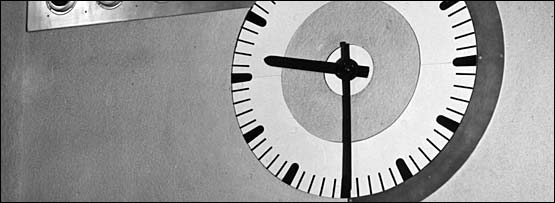
We're all, it seems, obsessed by time. It’s part of our everyday lives. If we know the time it can stop us from being late and missing important moments.
We can check the time on watches, clocks and even our phones. But what if you don’t have any of these? What if, for example, you are at a bus stop and you need to know what time it is now? How should you ask a complete stranger? Find out in this programme.
This edition of 'How to...' is suitable for elementary learners.
[an error occurred while processing this directive]
Don't forget to practise what you've learned with the activity.
Vocabulary connected with time
To be on time: to arrive at the correct time and not be late
Examples: The trains here are never on time. They're always late. We're leaving at 10.00 sharp. So be sure you're on time.
To be in time (for something): to arrive early enough (for something)
Examples: I don't use an alarm clock but I always wake up in time for the 7 o'clock news on the radio. Sorry, I won't be home in time for dinner, I have to work late at the office.
To kill time to do something to make time appear to pass more quickly
Examples: The film doesn't start for another 2 hours, so we'll have to kill time for a bit. On my way back from Australia I had a lot of time to kill at Singapore Airport - the shopping was great!
in (next to) no time very soon, very quickly
Example: On my bike I can get to the Sports Centre in next to no time. It takes longer by car because of the traffic.
Asking for the time
What time is it?
Excuse me, Sorry,
have you got the time do you have the time
please?
Other vocabulary
mate friend
Examples: I first met Pete at school. We've been mates ever since then. On Friday nights I usually go out to a club with a few mates.
mate informal way to address a stranger
Examples: Excuse me mate, have you got the time? Excuse me mate, have you got a light?
WHAT HAVE YOU LEARNT?
Activity For each question choose the one correct answer.