| | | | | | | ||||||
| | |||||||||||
Learning English - Words in the News 15 December, 2008 - Published 17:11 GMT New species discovered in the Mekong area | ||||||||||||
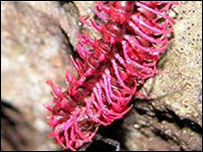
The conservation group WWF has reported that a bright pink millipede and a striped rabbit are among more than a thousand new species which have been discovered along the banks of the Mekong River in south east Asia within the last ten years. This report from Rob Norris: The conservationists are describing the largely unexplored jungles and wetlands in the Mekong Delta as a biological treasure trove. The discoveries, made in Cambodia, Thailand, Laos, Vietnam, Burma and China, range from the world's largest huntsman spider, which has a leg span of thirty centimetres, to a wild banana with purple skin. The Conservation Science Advisor to WWF, Mark Wright, says that between 1997 and 2007, scientists found an average of two previously undiscovered species every week: Mark Wright: They remained unknown in the outside world for so long because political conflicts in the region kept scientists away until the 1990s. WWF is warning that the main challenge facing the area is how to allow economic development while still maintaining environmental protection. Rob Norris, BBC conservationists largely unexplored a biological treasure trove lurid pink cyanide to deter predators with attitude conflicts maintaining environmental protection |
Latest stories 27 May, 2011 Destruction of smallpox virus delayed 25 May, 2011 Micro-finance 'misused and abused' 20 May, 2011 Lonely planets 18 May, 2011 Germany to invest in more electric cars 16 May, 2011 Argentina builds a tower of books Other Stories | |||||||||||
Useful links | ||||||||||||