| | | | | | | ||||||
| | |||||||||||
Learning English - Words in the News 25 August, 2006 - Published 15:33 GMT India's colleges confront quotas | ||||||||||||
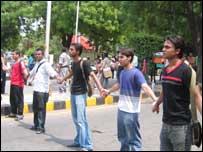
The Indian government has introduced a new bill to increase quotas for lower caste Indians and other disadvantaged groups in professional colleges. At present, twenty-two percent of seats are set aside. But the new bill will increase that to nearly fifty percent. This report from Sanjoy Majumder Introducing the historic bill in parliament, India's education minister said it was aimed at wiping out years of discrimination. Millions of students from traditionally disadvantaged communities would benefit, because they would gain access to some of India's best-known professional colleges, he said. But hundreds of students from these elite medical, engineering and other colleges have taken to the streets of the capital Delhi and other major cities in protest. Doctors and medical staff in many government hospitals have also gone on mass leave in protest. They argue that the move is a cynical ploy by politicians aimed at getting votes. Lower caste communities are a politically influential force across India, which is one reason why no political party is opposing the bill. The government says it'll only implement the programme over three years, to give the colleges time to prepare for the change. But many college administrators say it'll be difficult for them to meet the increased demand without a massive expansion in teaching staff and other facilities. Others fear it'll lead to a lowering of standards in some of the country's leading institutions which enjoy an international reputation for academic excellence. But those supporting the plan say it's a small price to pay to rid India of centuries of social discrimination. Sanjoy Majumder, BBC News, Delhi historic bill wiping out gain access to taken to the streets gone on mass leave a cynical ploy opposing the bill a massive expansion a small price to pay social discrimination |
LATEST STORIES 27 May, 2011 Destruction of smallpox virus delayed 25 May, 2011 Micro-finance 'misused and abused' 20 May, 2011 Lonely planets 18 May, 2011 Germany to invest in more electric cars 16 May, 2011 Argentina builds a tower of books Other Stories | |||||||||||
Useful links | ||||||||||||