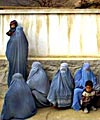
Much of the latest Human Rights Watch report focuses on life for the women of Herat in Afghanistan's west, but warns that the situation there is symptomatic of developments across the country. It speaks of police abuse, forced chastity tests and restrictions reminiscent of the Taleban.The Human Rights Watch report concedes that women's and girls' rights have improved since the demise of the Taleban, with many now allowed to return to school and university, but the report documents growing repression of social and political life.
In Herat it says religious police, government officials and squads of schoolboys monitor women and girls' behaviour and appearance. The report cites the use of local television and newspapers by the governor Ismail Khan to set standards. Freedom of movement is restricted and when they do leave their homes, women and older girls must wear the all-encompassing burka, or chowdry.
The group has documented testimony from citizens of Herat that women and girls who walk with men on the street, ride with them in cars, or even if alone with them in private homes, have been arrested. That arrest can be followed by a gynaecological examination to determine whether they have recently had sex, or to test for virginity.
Human Rights Watch accuses the international community of double-standards by justifying the war against the Taleban in part by promising liberation to Afghan women and then supporting war-lords and commanders who abuse women's rights.
Kylie Morris, BBC News, Kabul.