 | | | | | | | |
| Words in the News
Monday 03 December 2001
Vocabulary from the news. Listen to and read the report then find explanations of difficult words below.
| |
|
| |  | | |
Swiss army referendum
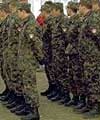
Summary: Swiss citizens have rejected a proposal to abolish the country's national army, following a referendum on the issue. The proposal asked voters to question the purpose of an army in a country which had declared itself neutral since 1515. This report from Emma Jane Kirby.
| | |
|
| | The News | |
| | | With seventy-nine per cent of voters rejecting the proposal to scrap the Swiss Army and just over twenty-one per cent voting in favour of its abolition, it’s clear that Switzerland’s armed forces are not under serious threat. Although it's a country which has been neutral for the past four centuries, Switzerland has one of the world’s largest armies per capita, with a force of over three hundred and sixty thousand men, costing around five and a half billion dollars a year - that’s almost a fifth of the annual government budget.
Switzerland without an Army, the group which put forward the proposal, claimed that abolishing the Army would free up resources and people that Switzerland could invest instead in non-military initiatives both at home and abroad. The Government warned that would force Switzerland, which is not a member of the UN, the European Union or any military alliance, to rely on other countries, contradicting its tradition of neutrality.
Although there are government plans underway to scale back the army over the next few years, the result of the referendum means that for now at least, every Swiss man will still be obliged to undergo regular military training until he can finally hand back his rifle at the age of forty-two.
Emma Jane Kirby BBC News, Geneva.
| | |
|
| | The Words
| |
| | | abolition
the formal ending of a system: it is abolished
| | |
| | | neutral
a neutral country does not support any side in a war
| | |
| | | per capita
literally, ‘by head’: the cost of the army is high in relation to the size of the population
| | |
| | | that’s
this amount represents
| | |
| | | put forward
if you put forward a proposal you suggest it should be accepted
| | |
| | | free up resources
make resources (money and people) available for another purpose
| | |
| | | that
abolishing the army and using the money for other purposes
| | |
| | | military alliance
armies from different countries working together
| | |
| | | scale back
reduce
| | |
| | | undergo regular military training
learn at set intervals the skills necessary to be a soldier
| | |
|
|
| | Other Words in the News archives | |
|





