This page has been archived and is no longer updated. Find out more about page archiving.
Search BBC
BBC World Service
BBCBBC NewsBBC SportBBC WeatherBBC World ServiceWorldservice languages
 
Front Page
 
WORLD 
 
News
 
Sport
 
Business
 
Entertainment
 
Science/Nature
 
Technology
 
Talking Point
 
In Depth
 
-------------Learning English
 
Programmes
 
Schedules & Frequencies
 
Site Map
 
REGIONS 
 
Africa
Americas
Asia-Pacific
Europe
Middle East
South Asia
 
SERVICES 
 
About Us
Contact Us
Site Map
Help
Text Only
Daily E-mail
News Ticker
Mobile/PDAs
 
spacer gif
You are in:Home page >News English > Words in the News
Learning English
spacer gif
 Words in the News
INTRO 
 

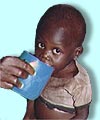
More than twelve million children in sub-Saharan Africa have been orphaned by AIDS according to a new report published by the international charity Christian Aid. Rachel Harvey reports.

IN FULL 
 AudioListen to the report in full
AIDS orphans in Africa

14th May 2001

AIDS orphans in Africa - Christian Aid report

NEWS 1 
 AudioListen to the first part of the report
  

The statistics are dramatic and depressing. More than 25 million people in Africa are living with HIV or AIDS; 8.5 per cent of the population in sub-Saharan Africa have the virus - many of those are parents, grandparents, aunts and uncles. The result - 12 million children orphaned by the disease. And in its report, entitled "No Excuses", Christian Aid says that figure will inevitably rise, perhaps to as high as 43 million by the year 2010. The Charity says an entire generation is growing up without parents, without teachers and without a future.

  AudioListen to the words
WORDS 
 

dramatic: something that is sudden and noticeable is dramatic

depressing: something that makes you feel sad and disappointed is depressing

aunts and uncles:formally, your aunts and uncles are the sisters and brothers of your parents - your mother and father. But the people who are married to your aunts and uncles are also your uncles and aunts

orphaned: someone whose parents have died is orphaned

Excuses: excuses are reasons why something has been done, has not been done or will not be done

inevitably: if something inevitably happens or will happen, it is the only possible result

NEWS 2  AudioListen to the second part of the report
  

Christian Aid is calling on rich nations to do more to help tackle the AIDS crisis and to alleviate the poverty which runs alongside it. It says an immediate commitment of three billion dollars annually is needed to provide basic healthcare and HIV/AIDS prevention strategies across sub-Saharan Africa. If not, it says, the prospects for economic development on the African continent look bleak. There are signs that AIDS is moving up the international political agenda. The UN Secretary General, Kofi Annan, has said the global fight against AIDS is his top priority. And just last week the United States President, George Bush, promised to contribute 200 million dollars to a new international AIDS fund. The question is whether effective action will be taken quickly enough to prevent the next generation of AIDS orphans.

  AudioListen to the words
WORDS  

tackle: if you tackle a problem, you deal with it in a determined way

alleviate: if you alleviate an unpleasant situation, you make it less serious

an immediate commitment: if you make an immediate commitment, you promise to do something without delay

prevention strategies: plans to stop something from happening

prospects: the possibilities or chances of something happening

bleak: a situation which looks bleak is unlikely to improve

moving up the international political agenda: becoming more important to governments and organisations

effective action: taking steps to achieve successful results

  Read more on this topic in BBC News Online and in the Learning English news feature

BBC copyright
 
Learning English | News English | Business English | Watch and Listen
 
Grammar and Vocabulary | Communicate | Quizzes | For teachers
 
Downloads | FAQ | Contact us