| | Words in the News |
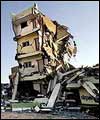
INTRO | | BBC business reporter Mark Gregory looks at the economic impact of the earthquake on Gujerat's 42 million people and the wider Indian economy. |
IN FULL | |  | Listen to the report in full |
 |  | 1st February 2001
Earthquake hits India |
|
NEWS 1 | | | Listen to the first part of the report |
| | | The earthquake has struck one of India's most prosperous and economically significant states, but damage to key industrial installations has been limited. The employers' organisation, the Confederation of Indian Industry, expects the disruption to cost about two hundred million dollars in lost production over the next couple of weeks. One key problem is a shortage of manpower - many workers have fled the area to avoid the risk of injury or death in aftershocks.
Factories are likely to be operating at half capacity. Lower output in Gujerat could result in nation-wide shortages of some raw materials and industrial products. Gujerat has one and a half thousand kilometres of coast line and a number of major ports. Industry officials say India's exports could be reduced by four or five percent in the financial year that ends in March. It'll take more than a week to complete repairs to the earthquake damaged port of Kandla, an important centre for handling imports of oil and exports of agricultural products. |
| | | | Listen to the words |
WORDS | | earthquake: when the earth's crust moves and shakes the ground above
prosperous: wealthy and successful
economically significant states: financially important areas
disruption:interference
manpower:people who can work
fled the area: escaped from the place in which they live and work
operating: runnning its service
reduced: become less |
|
| NEWS 2 | | | Listen to the second part of the report |
| | | The Bombay stock market has recovered from the initial shock of the news - share prices actually rose two percent on Tuesday. However, there was heavy selling of shares in India's Housing Development and Finance Corporation amid fears that borrowers will default on loans to buy property following the quake. One area of major long term uncertainty is the impact of the earthquake on India's gaping government budget deficit.
Finance minister Yaswant Sinha has asked the World Bank and the Asian Development Bank for one and a half billion dollars in loans to fund reconstruction. So far the World Bank has promised 300 million dollars of immediate aid. Analysts say much of the burden repairing the damage will inevitably fall on the already financially stretched government in Delhi. There's speculation that finance minister Sinha will take announce an extra tax to ease the financial pain in his annual budget speech due at the end of February. |
| | | | Listen to the words |
| WORDS | | share prices: the price of a company's stock borrowers will default on loans: people will not be able to pay the bank money they have borrowed
impact: effect, consequences burden: hard work or financial problems inevitably: the only possible result
speculation: thoughts and ideas about what might happen |
|
| | | Read about the background in BBC News Online |
|





