| | Words in the News |
INTRO | | The British government approved new laws allowing medical research using cells from human embryos. This could lead to new treatments for diseases. We heard from Greg Clovis, Executive Director of the organisation Human Life International, and Michael Wilks, head of the ethics committee of the British Medical Assocation. |
IN FULL | |  | Listen to the report in full |
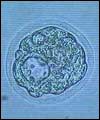 |  | 21st December 2000 Embryo Research in Great Britain |
|
NEWS 1 | | | Listen to Greg Clovis |
| | | My objection primarily is that we can never do evil that good might come of it. We can never use human persons and this is precisely what we're doing. We're using other human persons as objects for our benefits. That is the crux of the matter. |
WORDS | | primarily:the most important reason fornot approving of the research that: here, 'that' means 'so that' precisely: exactly using other human persons as objects for our benefits: using other people like objects for our own good crux: the crux of a problem is the most important part |
|
| NEWS 2 | | | Listen to Michael Wilks |
| | | It does have the potential for helping a lot of patients with quite common diseases like diabetes, but until we've done the research on stem cells and understand a lot more about how stem cells can be persuaded to become more specialised tissue we won't know exactly how much potential there is. |
| WORDS | | potential: if something has potential, it is capable of being useful in the future stem cells: a cell is the smallest independent part of an animal or a plant. A stem cell is a kind of cell which is present at the very early stages of development tissue: in animals and plants, tissue consists of cells that are similar in appearance and function |
|
| | | |
|





