| | |
Wind power
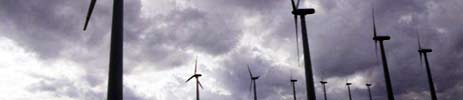
There is currently one working off shore wind farm, with one other under construction and another 14 in the pipeline. An off shore wind turbine is similar to those on shore, but taller at almost 60 metres. The three blades - each around 35 metres long - turn as the wind blows, driving a shaft that goes into the unit mounted at the top of the pylon. Inside, a gearbox increases the rotation speed. A generator then uses magnetic fields to convert that energy into electricity.
The turbines are normally situated around 5 kilometres from the shore, in relatively shallow water around 30 metres deep. Undersea cables take the electricity, at 700 volts, to the shore. There, a transformer converts it to the appropriate voltage for the UK's national grid, typically 33,000 volts.
The UK currently lags behind much of the rest of Europe in the use of wind power, despite having over a third of Europe's total off-shore wind potential. Europe's wind generated electricity capacity currently meets the domestic needs of an estimated five million people. It will also make a major contribution to the government's targets for renewable energy and create up to 20,000 jobs.
The move has been welcomed by environmental groups but
Environmental organisations Friends of the Earth and Green Peace said they were pleased with the plans, although some sites will face objections because of a possible impact on birds and wildlife.
"Hopefully this marks the start of a massive programme to harness the considerable opportunities offered by wind, tides and waves," said energy campaigner Bryony Worthington. "Renewable energy has the potential to provide all our energy needs and is a clean, safe and affordable alternative to nuclear energy and inefficient coal-fired power stations."
However, electricity prices may go up, as renewable energy is more expensive than gas powered energy because gas prices are low at the moment.
The Trade Secretary Patricia Hewitt announced the plans. She said investment in energy efficiency would also be increased to minimise energy waste from poorly insulated houses.
"As we sort out the energy efficiency side, we can make sure the bills to consumers don't go up because people will need less electricity to get the same amount of warmth and power."
| | |