 | | | | | | | |||||||||||||||||||||||||||||||
| | ||||||||||||||||||||||||||||||||||||
The 2000s | |||||||||||||||||||||||||||||||||||||
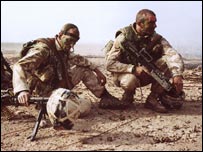
By April 2000, it had 151 million listeners – eight million more than in 1999 (the figure in 2006, 163 million, is another record. Online services had nearly trebled from the start of 1999, and the World Service website was the most popular audio news site on the internet. Although 70 per cent of listening was still on short wave, in 2000 listeners could hear BBC programmes on FM in 110 capital cities. Work was already taking place on a new transmitting station in Oman, to improve reception for 50 million listeners from the eastern Mediterranean to much of South Asia. But while the World Service began the 21st century with optimism, the world at large was be plunged into a new era of terror. It responded by concentrating greater efforts on talking to the Islamic world, while pulling out of providing language services to the former Eastern bloc. The day that changed the world 11 September 2001, and the terrorist attacks on the United States sparked the most extraordinary period of activity for the BBC World Service in a generation. The BBC’s North America business correspondent, Steven Evans, was on the ground floor of the World Trade Centre when it was hit by the second of two hijacked planes and he felt the walls shudder. Within minutes of the attack, the English language service began the longest continuous broadcast in its history, lasting more than 40 hours The interactive phone-in Talking Point attracted 30,000 emails from across the world. World Service at 70 The World Service’s 70th anniversary in 2002 brought accolades from, among others, the United Nations. In a lecture at UN headquarters in New York there was a tribute from the Secretary General Kofi Annan. He said that long before the internet, BBC radio connected the world, providing uncensored news, often cutting through what he called "the veil of tyranny" and delivered free of political interference. "In other words," he told his audience, "required listening: programmes to schedule your day around, if you are lucky enough to enjoy such freedom. For many, the BBC World Service has been a lifeline - to learning, to enlightenment, to hope itself." The war in Iraq The US-led invasion of Iraq began on 20 March 2003. The World Service in English went into action too. It had been planning for months how to handle the start of fighting, looking closely at how the first Gulf War in 1991 was covered and was able to provide continuous news and analysis for more than 220 hours. The Arabic Service broadcasted live from its new media centre in Cairo at breakfast times and produced an extra 13 hours of news and current affairs output every day. The comprehensive coverage meant the BBC could pride itself on being heard by the citizens of Iraq through the Arabic Service, British troops in the desert via the World Service, and being watched by the coalition’s Central Command Centre in Qatar on BBC World. Dozens of BBC journalists reported from the region. Some reporters worked alongside the coalition’s fighting units and there were news teams in Kuwait, Bahrain, Jordan, Syria, Egypt, Saudi Arabia, Iran and Turkey. The BBC was the first international broadcaster to set up FM transmitters in key cities. Within four weeks of the end of the initial conflict, the World service was on air in both English and Arabic in Baghdad, Basra and Al Amarah. Nuqtat Hewar Whilst Arab broadcasters, including pan-Arab satellite stations and newspapers, were providing in-depth coverage and analysis of the Iraq war and its aftermath, the voice of the Arab public was largely absent. The BBC’s decision to broadcast a daily phone-in programme about the war in Arabic, which deliberately excluded experts and pundits, was inspired by the nature of the comments being received by the Have Your Say forum on bbcarabic.com. As war came to be seen as increasingly inevitable, BBC Arabic was inundated by passionate, angry and thought-provoking comments from listeners and web users. Once hostilities commenced, there was a strong sense that these voices should be brought to a wider audience in the Middle East - especially to the group most directly affected, the Iraqis. The first edition of Nuqtat Hewar - Talking Point - went live on air on Wednesday 26 March 2003, just days after the start of the war. It received over 90 calls in less than an hour, and thousands of emails. Since the Iraq conflict, the programme has established itself as the forum for intelligent and challenging conversations for all Arabic speakers, and continued its ground-breaking tradition by tackling what many regarded as taboo subjects: homosexuality, racism in the Arab world, child abuse, corruption, and the Arab view of the Holocaust. The programme’s guiding principle remains that ‘ordinary’ people across the region and beyond have as much a right be heard as decision-makers and opinion formers. 21 years between the walls For many people the most powerful memory of the overthrow of Saddam Hussein was the toppling of his statue in Baghdad. For one Iraqi, hearing about it on the Arabic Service was the signal that he could emerge from 21 years of hiding in a narrow space between the walls of his parents’ home. Jawad Amir had been sentenced to death for supporting a Shia cleric, but he escaped and made his way back home where he carefully prepared his hideaway, a room only about a metre wide by one and a half metres long reached by a trapdoor. It had a small toilet and a well, and Jawad took with him items like a mirror, kettle, stove and a toothbrush. Crucially, he also had a radio, and in his dark hiding place he listened on headphones to the World Service and read the Koran. He said that in his 21 years of hiding, he never left and had only a tiny peephole to view the outside world. "I found out about the fall of the regime from BBC World Service," he said. "I used to listen in the late evening through until the morning. I believe that every person in Iraq breathed the air of freedom." The battle against HIV/ Aids In the run-up to World Aids Day in December 2003, the World Service featured what it described as the most ambitious project it had ever staged, involving all 43 language services simultaneously. With Aids the biggest killer in sub-Saharan Africa and the fourth-biggest in the world, the BBC set out to uncover the facts and help listeners protect themselves. There was also information provided in all the languages on the internet. There were special Aids editions from all the flagship programmes, with Africa Live, for example, finding out what was happening in Nigeria, Zambia, Malawi, Botswana, Ghana and South Africa. Talking Point featured President Festus Mogae or Botswana, where 35 per cent of the adult population were infected. The events included an Aids/HIV concert of music and poetry that was transmitted globally, with a similarly worldwide list of performers, including Oliver Mtukudzi and the Black Spirits from Zimbabwe, the Malian singer Rokia Traoré and the virtuoso Chinese musician Liu Fang. Reporting the tsunami The second biggest earthquake on record struck beneath the sea off Sumatra on Boxing Day 2004. It caused a series of vast waves – a tsunami - that over the next few hours devastated an area that stretched 4,500 km across the Indian Ocean. The coast of Sumatra was pounded by the water within 15 minutes; Thailand was hit an hour-and-a-half later; Sri Lanka felt the force two hours afterwards. And still the waves rolled on. Seven hours after the quake, the tsunami had reached Somalia, still with enough power to smash into buildings with a three metre wall of water. For some BBC staff, being at a disaster zone was not part of their plans. Bangladesh correspondent Roland Buerk was on holiday in Sri Lanka and in bed when the waves hit the beach outside his room. "There was no warning and we did not see it coming," he said. "We were swept along with motorbikes and cars, bits of wall and the ruins of buildings." He had to cling to a tree to save himself from being washed away. He borrowed a mobile phone from another tourist to make his report. The devastated area was huge, but the BBC was in a unique position to deploy correspondents quickly and start supplying information in Indonesian, Hindi, Somali, Sinhalese and Tamil. In Aceh province in Indonesia, the BBC also helped to replace damaged radio equipment and provide satellite dishes and receivers. Five hundred radios were distributed in the refugee camps set up along Aceh’s western coast as a way of keeping the victims informed and help them trace missing relatives. Crisis in Nepal After years of political turmoil - exacerbated by a nine-year war with Maoist insurgents - Nepal's King Gyanendra dismissed the government, placed the prime minister under house arrest, and declared a national state of emergency on Tuesday 1 February, 2005. King Gyanendra said he wanted to appoint his own cabinet and restore democracy within three years. The King imposed strict media censorship, including the banning of the BBC Nepali Service's FM rebroadcasters. He also cut all phone lines, something that had never happened before in Nepal’s history. As a response, the BBC Nepali Service extended its normal half-an-hour programme by a further 15 minutes. It was obvious that virtually the entire country was depending on the Nepali Service's shortwave broadcast to find out what was happening in their own country. The Andijan Massacre Violence came to the Uzbek city of Andijan in May, 2005, when troops opened fire on groups protesting against the jailing of those charged with Islamic extremism. Witnesses reported a bloodbath with several hundred civilian deaths. The Uzbek authorities put the overall toll at over 180. The president himself blamed fundamentalists seeking the overthrow of constitutional order and the establishment of a Muslim caliphate in Central Asia. At what many outside observers described as a show trial, 15 people were later convicted of organising the unrest and given prison terms of between 14 and 20 years. Dozens of others were also jailed for lengthy terms. The Uzbek Service managed to talk to demonstrators and witnesses of the violence and bloodshed. They were the first to report the scale of the event by talking to a demonstrator whose mobile was on even after he was shot. The BBC’s coverage differed greatly from the official line, as a result pressure from the government on BBC reporters increased. All BBC World Service’s correspondents were forced to leave the country and shortly afterwards the BBC had to close its bureau in Uzbekistan. A new direction "Drama! Catastrophic! The best news bulletins you can hear in Slovenia and they are axing them! Unbelievable!" That was how one listener to the Slovene Service protested when the BBC announced in 2005 that it was making the most far-reaching changes in World Service history. Ten language services were scrapped, nine of them set up at the time of the Second World War. The aim was to end broadcasting to countries that were developing an independent media and concentrate resources instead on the Islamic world, including setting up a new Arab television channel. The services that ended as a result of the changes were Bulgarian (set up in 1940), Croatian (initially the Serbo-Croat Service which began in 1939), Czech (1939), Greek (1939), Hungarian (1939), Polish (1939), Slovak (1941), Slovene (1941), Kazakh (1995) and Thai (1941, though it did not broadcast between 1960 and 1962). The BBC argued that the decision was based on political and media changes in Europe, which had lessened the need for the services. The Kazakh and Thai services, it said, were having low market impact. But the closures still came as a shock to listeners of services that for decades had cemented the BBC’s reputation during war and peace. Air crash in Nigeria On 29 October 2006 a passenger aircraft crashed near Abuja airport, killing at least 93 people including the Sultan of Sokoto, Alhaji Muhammadu Maccido, two senators and the deputy governor of Sokoto state. The Sultan, who held the position since April 1996, was the spiritual leader of Nigeria’s 70 million Muslims, and had played a role in bringing about reconciliation between Nigeria’s Christians and Muslims. He was also the leader of all the Emirs of northern Nigeria, who form part of the former Sokoto Caliphate. The BBC’s Hausa service covered the story in depth. In one transmission Ardo Abdullahi Hazzad reported the arrival of the bodies at Sokoto airport. It starts with the sound of the plane taxing. People break down as the bodies the plane carries are brought out. Some people are consoling those crying. Others mumble prayers. |
| ||||||||||||||||||||||||||||||||||||
| |||||||||||||||||||||||||||||||||||||






 Listen to the sounds of the World Service in the 2000s

