 | | | | | | | ||||||||||||||||||||||||||||||||||
| | |||||||||||||||||||||||||||||||||||||||
Suez splits a nation | ||||||||||||||||||||||||||||||||||||||||
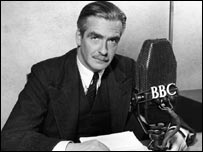
The crisis came after Egypt’s President Nasser nationalised the Anglo-French Suez Canal Company in July 1956. In retaliation, Britain and France secretly supported an Israeli invasion of the Sinai Peninsula. London and Paris then offered to intervene and set up a buffer zone between Israel and Egypt, but when that was refused, on 31 October, 1956, their troops took over the Canal zone. The crisis escalated when the Soviet Union offered its support to Egypt. As this was during the Cold War era, the United States wanted to stop any expansion of Soviet influence. So it put pressure on Britain and France to pull out, which they did in November. BBC turns down Menzies What made this an awkward time for the BBC was that unlike during the Second World War and conflicts since, such as the Falklands and Iraq, there was no broad consensus in Parliament, with the two main parties at Westminster split. And though the Labour Party, led by Hugh Gaitskell, began by opposing Nasser’s nationalisation of the Canal, they swung round to being highly critical of the Conservatives under Anthony Eden. This swing began even before the invasion, in August, when the Australian Prime Minister Robert Menzies, who was visiting London, offered to make a radio broadcast to support Eden. The BBC turned the idea down. John Green, Controller of Talks (Sound) believed that after a broadcast by Eden and another planned for the Foreign Secretary Selwyn Lloyd, Radio was being too one-sided in favour of the government. An angry Anthony Eden rang the BBC chairman Sir Alexander Cadogan to complain. They were old friends and Cadogan sided with the Prime Minister, describing the BBC decision in his diary as "nonsense". But although there were fears within the Corporation that Cadogan might take a more interventionist approach, the decision not to let Menzies broadcast stood. A new problem The guidelines on ministerial broadcasts had been agreed in 1947 and were that they should not be controversial.
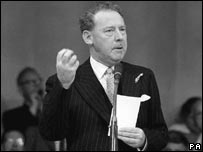
But if the Opposition thought a broadcast overstepped the line, their chief whip in parliament could ask his government opposite number to broadcast a reply. If the government refused, the BBC Governors would be asked to arbitrate. That put the Governors in an awkward position of having to make a political decision. As the then Director General Sir Ian Jacob put it: "The procedures which govern political broadcasting were designed for domestic controversy of the kind that normally accompanies public life; a national emergency when government action was not nationally supported presented a new problem." Government tries 'disciplining' BBC Once the Israelis invaded on 29 October, things escalated. The Prime Minister, Anthony Eden, made a broadcast to which Gaitskell demanded a reply. Eden opposed the idea, believing the country should be united in what he regarded as war and feared troops’ morale would be undermined. But asked to arbitrate, the BBC agreed to Labour’s request. Gaitskell’s broadcast, on Sunday, 4 November, played up the divisions that Suez had caused. So much so that Eden's PR adviser William Clark, called for parts of the speech to be edited out when it was broadcast on the Arabic Service, which was broadcast in Egypt, so it wouldn’t comfort the enemy and undermine Britain’s credibility. Clark later wrote that as a result of the Corporation's stance there were "innumerable schemes to discipline the BBC," discussed. There were later reports – not substantiated - that the government even considered taking it over, but certainly Eden wanted the BBC to be as supportive of the government as it was in the Second World War. BBC stands firm The big problem, as Eden saw it, was the way the External Services reported dissent. Even before military action began, their reviews of the British newspapers reported the critics – something the government believed undermined its position when trying to issue ultimatums to Egypt. To drive that point home, Jacob was called to the Foreign Office and told ministers planned to cut the BBC's grant by a million pounds, with the money going to the government’s overseas information services. Jacob and BBC chairman Cadogan went to see the Lord Privy Seal RAB Butler to protest and got the threatened grant cut reduced to half a million pounds (the threat was later dropped completely). But the government wanted its own man in the BBC to keep an eye on things, and after the Anglo-French attack began on 29 October, a representative was sent to Bush House to vet bulletins in Arabic. Over the next few weeks, under regular attacks from the Foreign Office and Conservative MPs, the BBC stuck to its principle that it did not broadcast one story to Britain and a different one to the rest of the world. And when it reported an editorial in the Manchester Guardian, describing the Anglo-British invasion as "an act of folly without justification", the decision was backed all the way up to the chairman, who ruled that press reviews should continue as before. In the end, it wasn’t the BBC that backed down, it was the government. International pressure from the US and the United Nations forced Eden to withdraw British troops and not long after, an ill and exhausted Prime Minister flew to Jamaica to recuperate. The following year, he resigned. The BBC had faced down its government critics and upheld its independence. |
BBC RELATED LINKS  Suez: End of empire Suez: End of empire History Audio slideshow: Suez crisis History The Suez Crisis: Key maps History Suez Crisis: Key players History Eden: A man under strain History | |||||||||||||||||||||||||||||||||||||||
| ||||||||||||||||||||||||||||||||||||||||






 Listen to Anthony Eden's speech

