 | | | | | | | |||||||||||||||||||||||||||||||
| | ||||||||||||||||||||||||||||||||||||
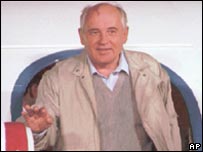
Gorbachev listens while being held captive | |||||||||||||||||||||||||||||||||||||
"The BBC sounded the best" was how the former Russian president Mikhail Gorbachev described his radio listening during the August 1991 coup in which opponents of his reforms took him prisoner. Mr Gorbachev was held for three days in a country house in the Crimea, and his only contact with the outside world was listening to foreign radio broadcasts on an old radio he found. Speaking after the coup ended, Mr Gorbachev’s praise seemed like a triumph of BBC journalism over the rest of the world. The BBC enjoyed the publicity, and quickly took out a newspaper advertisement showing a photograph of the president at his desk and the words: "When you need to know what’s going on in the world." A technical interpretation? A former BBC newsroom journalist then spoilt the celebrations by writing to the staff newspaper Ariel: "Before this tribute becomes enshrined in BBC mythology perhaps you could ask Monitoring to tell us exactly what Gorbachev said. Just in the interests of impartial reporting." The BBC’s Monitoring Service supplied the answer. Mr Gorbachev had been talking about how his guards had rigged up an aerial to receive foreign radio broadcasts and "The BBC sounded best." John Tusa, the Managing Director of the BBC World Service rejects that technical interpretation. In his book A World in Your Ear he recalls the news conference at which Mr Gorbachev made his remarks: "It was clear from the laughter and applause from the international press that greeted his remarks that they all took it as I believe it was meant - as a tribute both to the BBC Russian Service’s journalism, as well as their audibility." Major support Tusa says that at the same news conference, the President asked where the BBC correspondent was "…and when it turned out he was not present - he was probably monitoring it on TV in the BBC office - Gorbachev said: 'Never mind. The BBC knows everything already.'" Whatever the interpretation put on Mr Gorbachev’s comments, there was undoubted praise from another national leader: the British Prime Minister John Major wrote to praise the "speed and effectiveness" of the BBC’s work. And the output won the BBC the President’s Prize at the Prix Italia awards. |
BBC RELATED LINKS  The Cold War The Cold WarHistory | ||||||||||||||||||||||||||||||||||||
| |||||||||||||||||||||||||||||||||||||






 Listen to Mikhail Gorbachev talking about the BBC after he was released from house arrest (Russian)

