 | | | | | | | ||||||||||||||||||||||||||||||||||
| | |||||||||||||||||||||||||||||||||||||||
The day that changed the world | ||||||||||||||||||||||||||||||||||||||||
September 11th, 2001 and the terrorist attacks on the United States sparked the most extraordinary period of activity for the BBC World Service in a generation. The BBC’s North America business correspondent Steven Evans was on the ground floor of the World Trade Centre when it was hit by the second of two hijacked planes and he felt the walls shudder. Within minutes of the attack, the English language service began the longest continuous broadcast in its history, lasting more than 40 hours (a second marathon programme accompanied the beginning of the Coalition assault on the Taleban in Afghanistan a month later). The interactive phone-in Talking Point attracted 30,000 emails from across the world. The Persian and Pashto services almost doubled their output. And to make it easier for people in the region to hear developments, short wave transmission power was boosted and a medium wave transmitter hired to broadcast to Afghanistan, Iran and Pakistan. Award-winning journalism
The British Foreign Office provided an extra £2.8 million to support the immediate BBC response to 9/11, including extending the Arabic news service to a 24 hours-a-day operation, and providing more news in Urdu for Pakistan. In acknowledgement of the BBC’s efforts, the World Service won the top prize for radio in the UK, the Sony Radio Academy Gold Award for 2001. The judges praised the service for reaching “new heights”. They said the quality, integrity and comprehensiveness of its reporting and analysis provided a “unique and unparalleled service”. The top award of the Commonwealth Broadcasting Association, the Elizabeth R Award, went to Baqer Moin, head of the Persian and Pashto services. The BBC goes further Under the rule of the Taleban in Afghanistan, the media had been suppressed, and radio from overseas was the main form of communication. To help the country develop its own broadcasting service, there was help from the BBC World Service Trust, which works with people in developing and transitional countries to improve the quality of their lives through use of the media. Once the Taleban regime had been overthrown, the Trust began work on training journalists and equipping radio studios. In charge of the work was William Reeve, previously the BBC correspondent in Kabul and the first western journalist to return to the Afghan capital before the Taleban fled. The success of the BBC became clear when the first audience research was held after the Taleban left Kabul. It indicated that 82 per cent of Afghans listened to BBC broadcasts in Persian and Pashto every week. |
| |||||||||||||||||||||||||||||||||||||||
| ||||||||||||||||||||||||||||||||||||||||






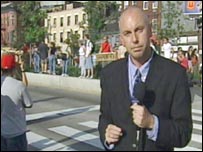
 Listen to Steven Evans reporting on the September 11 terror attacks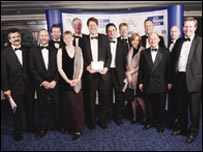


 America's Day of Terror