 | | | | | | | ||||||||||||||||||||||||
| | |||||||||||||||||||||||||||||
Climate change and Africa | ||||||||||||||||||||||||||||||
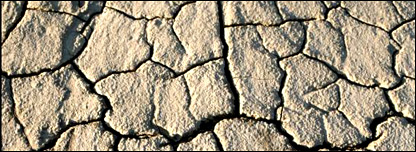
Africa is, on average, 0.5C warmer than it was a century ago, but the latest research suggests that some places are more than 3C warmer than just 20 years ago. Food production in countries in the Horn and the Sahel regions is always at the mercy of the climate and the rising temperatures are putting these arid areas in an even more precarious position. There is plenty of agreement on the fact that global warming and greenhouse emissions are caused by the rich industrial nations - but Africa is bearing the brunt of the problem. Sierra Leone under pressure Two reports published recently confirmed that the over-exploitation of Sierra Leone's natural resources has made the country vulnerable to extreme weather events linked to climate change. Umaru Fofana has been investigating the problem. Disappearing Lake Chad
Once Africa's third largest body of water, today, Lake Chad is just a fraction of the size it was in the 1960s, as the satellite image illustrates. The shrinkage is blamed on the increase in agriculture and declining rainfall. Anada Tiega is the senior technical advisor for the Lake Chad Basin Committee. He spoke about the challenge of saving Lake Chad to our N'Djamena reporter, Stephanie Hancock. Encroaching sea waters Lakes levels may be falling with rising global temperatures, but coastal dwellers are experiencing rising sea levels and bigger storms as a result of the same phenomenon. In Senegal a violent storm 20 years ago meant some fishing villages had to relocate - and a nature reserve that used to be at the end of a small peninsula, called "La Pointe de Sangomar" (the Sangomar Tip) is now an island. Tidiane Sy travelled to the area and compiled this report. Building-in energy efficiencies Cape Town sits on the southern tip of South Africa and as a coastal city it is vulnerable to the effects of higher global temperatures but it is also in the throws of a construction boom, as the country strives to be ready to host the 2010 World Cup. Mohamed Allie reports how Cape Town has become the country's first city to approve a strategy to tackle climate change. Tree love
Conserving trees is an important way to combat the carbon emmissions that are being pumped into the atmosphere. Vicky Ntetema has come across innovative and simple ways of protecting Tanzania's greenery; from tree-planting initiatives to new and sustainable approaches to brick-making. Carbon trading Can carbon trading be a useful way of reducing greenhouse emissions as industry and individuals make efforts to offset the amount of carbon that their activities cause to be released into the atmosphere? Fern is an environmental organisation that monitors the impact the European Union has on the world's forests; Network Africa's Christophe Pons asked representative, Jutta Kill, to explain carbon trading and carbon offsetting.
A project set up by The Greenbelt Movement that will see two million trees planted in the central highlands of Kenya is participating in carbon off-setting at a grassroots level. It is hoped this initiative will benefit local people with income generating projects that revolve around the forest while industrialised countries will benefit from the emission reductions brought about by the trees. Kevin Mwachiro prepared this report. |
LOCAL LINKS EXTERNAL LINKS The BBC is not responsible for the content of external internet sites | |||||||||||||||||||||||||||||
| ||||||||||||||||||||||||||||||
| ||||||||||||||||||||||||||||||






 Climate threat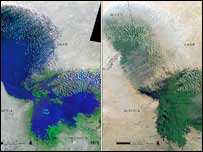
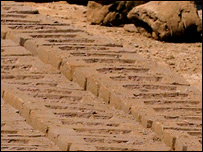
 I use iron moulds that can be used for 100 years but wooden moulds can only be used for 3 months
 Network Africa
