| | | | | | | |||||||||||||||||||||||||||||||||||||||||||||||||||||||||||||||||||||||||||||||||||
| | ||||||||||||||||||||||||||||||||||||||||||||||||||||||||||||||||||||||||||||||||||||||||
Abolition: The beginning of the end | |||||||||||||||||||||||||||||||||||||||||||||||||||||||||||||||||||||||||||||||||||||||||
To mark the 200th anniversary of the Abolition Act, our specially commissioned reports explore the history and legacy of slavery for Africans on the continent and in the destination countries. Thursday 30th March Caribbean commemorations Most of the millions of slaves that were taken from Africa during the Trans-Atlantic slave trade were sent to work on plantations in the West Indies and Caribbean nations are holding their own commemorative activities to mark 200 years since the British Parliament abolished slavery. Tony Fraser went to some of these events in Trinidad and sent this report from the capital, Port of Spain. New York's grim past When people think of slavery in the United States they think of the South, not the North, they think of Mississippi and South Carolina and definitely not New York. However, an exhibition on New York's slave past and the discovery of a burial ground in the city which contains the bodies of more than 20,000 enslaved Africans, has forced New Yorkers to reconsider the way they see their famous city. Leslie Goffe has been to have a look. Wednesday 28th March The East African slave trade East Africa has been marking the 100th anniversary of the end of the Arab slave trade. The trade on the East African coast reached its peak in the late 18th and early 19th century, just when the abolitionist movement in Europe and America was gaining steam.
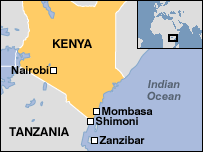
One of the major East African slave trade centres was Bagamoyo along the coast of the Indian Ocean. Thousands of slaves from the Congo, Burundi, Rwanda and interior Tanganyika were gathered here before being shipped first to Zanzibar then to India, the Middle East, the Arab world and some to Europe via Mauritius. The small stone historic town is occupied by the descendants of slaves and slave masters. Vicky Ntetema met Mr Samahani Kejeri, a descendant of a slave owner in Bagamoyo. Tuesday 27th March Arab slaving on the east coast of Africa was not abolished until the end of the German rule 85 years ago, although the treaty to end slavery was signed in 1873 between the British Consul in Zanzibar, Sir John Kirk, and Sultan Barghash of Zanzibar. Kenyan witness Arab raiders hunted people as far south as Lake Malawi and took them to the slave market in modern day Zanzibar. Some captives managed to escape or were rescued; 93-year-old Walter Mbotela's grandfather was one of the lucky ones, he was saved by a British ship and allowed to live as a free man in Kenya. Walter Mbotela told his grandfather's story to Kevin Mwachiro. Jamaica's Maroons At the time of the slave trade, Jamaica in the West Indies was one of the world's most important sugar producers and 100,000s of Africans were forced to work the plantations for 300 years. Two hundred years on Jamaicans are looking back at the role their ancestors played in freeing themselves from enslavement. Clive Myrie brings us the story. Coming home Some of the descendants of slaves taken to America and the Caribbean are now making their way back to the continent under their own steam and with dreams of healing the wounds in the past. Rabbi Cohain Netanya Halabi is one of them, he's lived in Ghana for the last 13 years. Kwaku Sakyi-Addo asked him how many African-Americans had settled in Ghana. Monday 26th March Slavery and Sierra Leone
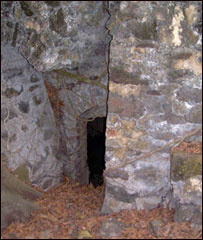
Sierra Leone came into being as a country because of the slave trade; many slave-holding posts lined its coast where captured slaves were shackled in dungeons to await transportation to slave masters abroad. Umaru Fofana visited Bunce Island, a derelict former trading post close to the capital Freetown. The country's capital is an important symbol of the abolition of the trade. Its capital Freetown is so named because following the Abolition Act 200 years ago, the "recaptives", as the freed slaves were known, were take to Sierra Leone and given their freedom. Umaru Fofana took Olu Awoonor-Gordon, a historian and descendant of freed slaves to the passage through which the former slaves passed to regain their freedom. Sunday 25th March The musical legacy of slavery The Africans who were enslaved and taken to cut sugar cane and pick cotton on American plantations are long gone now, but the music they brought with them in their memories from homes in Africa and the music they helped create in America - the work songs, the spirituals, the blues, the jazz, and rap - is still very much alive and well. Leslie Goffe has been on a journey through African-American music from slavery till today. Benin's slave past
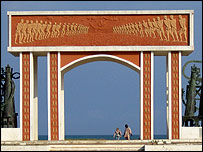
Beninois artist and photographer Romuald Hazoume is concerned with marking the history of slavery. Two large photographic artworks by him form part of a major exhibition in London's October Gallery, Nick Ericsson met him there to talk about his work. The Middle Passage To understand more about what was endured by slaves on their sea-journey west, Emma Joseph visited The Barbados Museum in the capital Bridgetown. Museum director, Alexandra Cummins took her round, she begins with the display documenting the horrifying conditions under which slaves were transported by sea from the West Coast of Africa to the Caribbean and the Americas. |
LOCAL LINKS  BBC | Abolition BBC | AbolitionNews EXTERNAL LINKS The BBC is not responsible for the content of external internet sites | ||||||||||||||||||||||||||||||||||||||||||||||||||||||||||||||||||||||||||||||||||||||||
| |||||||||||||||||||||||||||||||||||||||||||||||||||||||||||||||||||||||||||||||||||||||||
| |||||||||||||||||||||||||||||||||||||||||||||||||||||||||||||||||||||||||||||||||||||||||






 Trinidad remembers