 | | | | | | | ||||||||||||||
| | |||||||||||||||||||
Focus on Casamance | ||||||||||||||||||||
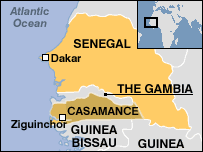
The people in Senegal's southern region of Casamance have lived through more than two decades of a separatist conflict, waged between the Senegalese government and the Movement for the Democratic Forces of Casamance (MFDC). A peace deal in 2004 was supposed to have brought fighting to an end, but violence has erupted again. Isolation The problems are fuelled by the physical isolation of Casamance, it is cut off from the rest of Senegal by the Gambia. The BBC's Tidiane Sy, travelled to Casamance to see how the region is faring and what impact the continued isolation has on its development and efforts to attain a permanent peace. For his first report he took the recently re-commissioned ferry service that links the capital Dakar and Casamance. It replaces the boat that sank 4 years ago, but as he found out, the isolation remains: Tourism More than 700,000 people visit Senegal every year making tourism one of the country's key foreign exchange earners. With its beaches and forests, Casamance was an attraction in the early years after independence, but once the rebellion started in 1982, tourism slumped. In his second report from the region, Tidiane Sy explores efforts to revive tourism there. Ongoing insecurity As an opposition leader, President Abdoulaye Wade had vowed to solve the two decades of separatist rebellion within 100 days of being elected president. That was in 2000. Critics say that with fighting in March, the peace accord that he signed 4 years later has met the fate of its predecessors. In the final instalment of our series of reports from Casamance, Tidiane Sy reports on the consequences of the ongoing insecurity. | LOCAL LINKS EXTERNAL LINKS The BBC is not responsible for the content of external internet sites | |||||||||||||||||||
| ||||||||||||||||||||
| ||||||||||||||||||||






 Click here to listen
 BBC News: Rebuilding war-ravaged Casamance