Friday 1 September, 2000
Literature: A Slave Defined
The impact of slavery on black people has shaped not only many cultures in the Caribbean, South America and the deep south of the USA, but also much of the attitudes prevalent more widely as the building blocks for racism. The dominant themes of slavery have come to be seen solely in terms of what white people did to black people.
Little attention has been paid to the way black people themselves reacted to the treatment they received. Slave Narratives, examines accounts of slavery in an attempt to discover how the system impacted on individuals and families from the 17th century to our present age. Here the classic tale of Uncle Tom’s Cabin is examined as a work of antislavery sentiment.
Definition
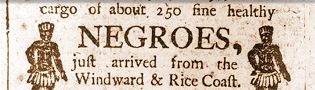
A lot has been written about the cruelties of slavery in the Caribbean and the Americas that affected relations between races in our own century with such terrible consequences. But far less is known about the experience of living under such conditions. The reasons for this are neither profound nor mysterious. Slaves were defined by laws framed by white men to ensure that the black would remain under his dominion as chattel.
As late as 1856, less than six years before the outbreak of the American civil war, the Supreme Court of North Carolina still had on its statute books the legal definition of a slave as he who is "… doomed in his own person, and his posterity, to live without knowledge, and without the capacity to make anything his own, and to toil that another may reap the fruits."
The writer Sukhdev Sandhu explains the situation further:
‘In the 18th century literacy was an index of being a human. If you couldn’t read and you couldn’t write you weren’t a human and if you weren’t human it became very easy to treat black people as brutes and cattle. Racial theory of the times compared blacks to orang-utans and Negroes were sold in beast and bird shops.’
Injustice
How then to show the injustices and untruths behind these views? How to show that the black man was as much a Christian as any man, as much his equal in intelligent discourse or capacities for erudition? These became the tasks of abolitionists around the world, an outcry whose echo would reverberate in America until that nation was split asunder in a bloody Civil War.
As black and white men of learning in their thousands wrote in support of the abolition of slavery, a momentum grew that once in motion could not be stopped. But it took a book with a simple tale, written in 1851, to ignite a fuse under that momentum that sent it soaring with incandescent afterburn - Uncle Tom’s Cabin.
Uncle Tom’s Cabin
Harriet Beecher Stowe came from a prominent northern abolitionist family. Throughout 1851 she worked on fictional accounts of slavery, which were published in a weekly antislavery newspaper. Her stories were based on her observations of slaves fleeing the state of Kentucky and arriving at her hometown of Cincinnati, Ohio and centred on the sanctity of the family and the evils of slavery.
Beecher Stowe’s tales became so popular that she felt compelled to extend them further and early in 1852, Uncle Tom’s Cabin was published. The story is simple enough - an exploration of the hardship of slavery, but what was radical about the tale was that it examined the relationship between slave and owner and in doing so gave the slave a voice and, more importantly, an identity.
The Significance of Uncle Tom
Beecher Stowe's Uncle Tom's Cabin, did not just win overwhelming admiration for its writer - though banned in the deep south, it still sold over 300, 000 copies in the first year of its publication. But it also dealt a bitter blow to the arguments of pro-slavery factions throughout plantation societies of America's deep South.
Literary critic, Dianne Roberts recognises the importance of the text and the impact that Uncle Tom had, especially in the changing minds leading up to the Civil War:
‘Beecher Stowe was just obsessed with the notion that American democracy was poisoned by this. That this was just not right, that American democracy needed to be renewed and needed to actually practise what it preached in the founding documents. She is perfectly well aware that the constitution and the bill of rights was written by a lot of men who were slave holders and that the rights enshrined in the constitution and the bill of rights didn’t apply to women and it didn’t apply to black people... She had this kind of apocalyptic sense that God would punish America if this wasn’t fixed.’
| 'What was radical about the tale was that it gave the slave a voice and, more importantly, an identity' |
|
Slave Uprising
Beecher Stowe created the character, Uncle Tom, to win approval for blacks by making them appear humane and gentle. Ironically, those are the very terms that has made the name, Uncle Tom synonymous for most black people with unacceptable obedience, docility and perhaps the strongest terms of abuse it is possible to call a modern black person. Whether or not this is a true reflection of Tom in the book or was intended to be so by Beecher Stowe, is irrelevant. The fact is, the name has come to be identified with a black man who will not fight back in the face of racial injustice. And to a large extent, Beecher Stowe had got it right, for there were few active uprisingings by slaves.
One good reason for the lack of black resistance, was that if slavery itself was brutal and cruel, the penalties for trying to escape that condition was made even more frightening by white slave owners. The fugitive slave laws, known as the Missouri Compromise, meant that blacks were not safe even when they'd fled to so-called free States. They remained the rightful property of their owners and therefore could be made to return to their lives of horror if discovered or betrayed whilst in hiding. Only the very brave or desperate chanced to face such consequences of their recapture.
Contradictions and Inconsistencies
Uncle Tom himself was based on Josiah Henson who, in 1830, had fled with his family across the Ohio River to Canada. For many, who appreciate the impact that Uncle Tom had, here lies the first of several inconsistencies. For example, could a white woman accurately recall a true story about a black man as a fictional account?
Further debate also surrounds Beecher Stowe’s depiction of Tom as being almost Christ-like. This is no clearer than in the following passage:
‘Legree drew in a long breath and suppressing his rage took Tom by the arm. “I’ve made up my mind, and counted the cost. You’ve always stood it out agin me: now I’ll conquer ye, or kill ye! I’ll count every drop of blood there is in you till ye give up!
Tom looked up to his master, “Mas’r if you was sick or in trouble, or dying, and I could save ye, I’d give ye my heart’s blood; and if taking every drop of blood in this poor old body would save your precious soul, I’d give them freely, as the Lord gave his for me. Do the worst you can, my troubles’ll be ove soon; but if you don’t repent, yours won’t never end.”’
In giving Tom a Christian voice, Beecher Stowe had certainly given the slave a character, but in doing so was she not also sealing his fate? Roberts comments:
‘Uncle Toms Cabin is a great abolitionist novel - it changed a lot of hearts and minds, but there is no denying a certain condescending idea against black people... Beecher Stowe like many people of her time, and indeed our time, have a sense that “the whiter they are, the smarter they are” as they used to say in the South. So the most sympathetic, on an intellectual and sentimental level are the characters that are most white. Uncle Tom himself who is very, very dark is also very simple. His simplicity is devastating because he is basically a black Christ, which is pretty revolutionary in itself, but there was always that condescension. We can’t imagine a future for Uncle Tom, he must die and be martyred and redeemed.’ |  |  | | | Disapproval |  |
| | Not everyone was overjoyed with the success of Uncle Tom's Cabin. Thomas Dixon, for instance, felt that slavery had just about got the measure of the black man.
His novel, The Leopard's Spots: A Romance of the White Man's Burden showed that sympathisers like Beecher Stowe had been misguided in their assessment of the black man. The benign Christian soul of Uncle Tom was false he felt, for at heart the black man was a savage beast, a threat to white womanhood and American civilisation. Like much of the earlier fiction of southern romance it sought to counter the popular factual accounts of slave narratives. |
|  |
|