 | | | | | | | |||||||||||||||||||||||||||||||||||||||||||||||||||||||
| | ||||||||||||||||||||||||||||||||||||||||||||||||||||||||||||
The Great Communicator | |||||||||||||||||||||||||||||||||||||||||||||||||||||||||||||
It's time. It's time to move on. Move on to something. Other things. How do I know? Well, I just know. It's like falling in or out of love. You don't need a seminar. You just know it when it hits you. So I know it's time. It's been over 13 years now since I filed my first report for the BBC. I've been trying, without success, to recall what the piece was about. I remember though that it was Anna Umbima, the Kenyan-Ghanaian former presenter of Everywoman, who held my hand through scripting and delivering it down the phone line from Accra to Network Africa. A year earlier, Alice Martin, a senior producer in the African Service, had approached me to try my hand for the BBC. I was a news agency reporter with a little bit of television presenting experience. But I had never done radio, except as a postgraduate student at the University of Ghana's School of Communication Studies where the course was long on the theories and limited on practicals. Before Umbima bailed me out, I had made an attempt at recording an interview with the Ghanaian-born British fashion designer Ozwald Boateng at his studio in London. It was a disaster. Connecting the dots The interview went everywhere – from scissors to women to Marx to racism. No connecting dots. No structure. Nothing. I threw in my opinions generously. Plus there was wine on the table. It must have been an hour-and-a-half-long discourse. In the end, I didn't have the experience to edit the mess down to the required four or five minutes for Network Africa or Focus on Africa, not even 30 minutes for African Perspective. But I learnt.
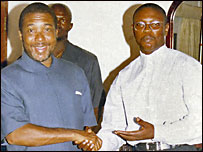
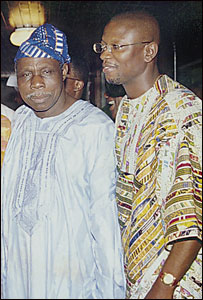
And that wasn't the only lesson either. In November 1998, I had an exclusive interview set up with Nigeria's General Olusegun Obasanjo in Cotonou, Benin, shortly after he came out of prison. This was his first interview with the BBC after he had declared his intention to run for president. After 30 minutes of questions and answers – life in jail, his feelings towards Sani Abacha, his jailer, and why he wanted to lead Nigeria again – I proceeded to hit the stop button on the minidisc recorder, which was then the newest gizmo in the industry. I found to my shock that the recorder had been on pause all along! I didn't get a second chance. Interviewee highlights Thankfully, the highlights of my BBC years haven't been all blunders. I met and interviewed (without a hitch) the current United Nations secretary-general, Ban Ki-moon, and his two predecessors, Kofi Annan and Boutros Boutros-Ghali, as well as singer Bono, boxer Lennox Lewis, broadcaster Larry King and others. I also came face to face with Liberia's former President Charles Taylor many times. Our last encounter was probably the most memorable.
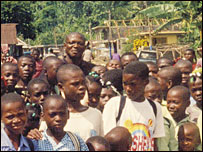
That was the day the UN Special Court in Sierra Leone announced his indictment for war crimes. The court expected the Ghanaian authorities to handcuff him. I stayed within a few feet of him whenever I could, throughout the day. As he left his hotel, apparently to the airport to board his plane back to Monrovia, the unmistakable, almost haunting signature tune of Focus on Africa tolled like a church bell, calling the faithful to gather round the alter of BBC radio. I drove behind President Taylor's convoy, and filed a live report on his movements on the programme. He was listening in his car. Once at the airport, he stepped out of his car and came towards me. Wagging a manicured finger, he said in his famous cool, firm and measured tone, "Kwaku, that report you just did was highly unprofessional. You should not have done that!" "I was just doing my job, sir," I replied. He shot me a cold look and glided majestically away, swinging his carved walking stick every five steps or so. But I knew that if this had happened in Monrovia rather than the safety of Accra, I might well have become a statistic. An African abroad But I have had fun too, especially when travelling and reporting. Travelling to Haiti in 2003 was special. I had gone there to collect reports for the BBC's global HIV/Aids week. I remember stopping at Bariadelle where my driver had to pump a tyre. I decided to take some pictures, which attracted a few youths.
"Where you from?" "Ghana." "Ghana? Africa?" "Yes." "You real Africain?" "Yes, me real Africain." "Jean-Pierre, Pascal, Antoine, tout le monde, un Africaaain! Un Africaaain! Un Africaaain!" A large crowd surrounded me. I was the first African to set foot in Bariadelle, at least in the living memory of the celebrants. Indeed, a voodoo priestess I went to interview told me that her father's life-long wish had been to meet an African from the continent. He had died a few weeks before my visit. She put three chairs up on his grave. We sat on two; he "occupied" the third so he could "join" our conversation. and so... farewell And so it's been 13 exciting years of meeting people and bringing their stories of birth and death, of hope and despair, of faith and collapse to the world's endless corners. Most of the time I've worked from my personal office, minus a professional studio. Now, after years of asking, there's finally a lovely office with two fully-kitted modern studios at La Bone, a middle-class part of Accra. But like the biblical Moses, I'm perfectly content to have reached the mountain top without making the final lap to Canaan. The view from afar is good enough. Life is too short to spend riding the same matatu and travelling the same road, however scenic. I'm off to try my hands at communications management. Wish me luck. I'll miss you. This article appears in the July - September 2007 edition of BBC Focus on Africa Magazine. |
| ||||||||||||||||||||||||||||||||||||||||||||||||||||||||||||
| |||||||||||||||||||||||||||||||||||||||||||||||||||||||||||||
| |||||||||||||||||||||||||||||||||||||||||||||||||||||||||||||






 He shot me a cold look and glided majestically away, swinging his carved walking stick every five steps or so.
 SUBSCRIBE: With the sharpest writing and the finest photography, a Focus on Africa magazine subscription will keep you abreast of all the important developments across the continent.


