| | | | | | | |||||||||||||||||||||||||||||||||||||||||||||||||||||||||||
| | ||||||||||||||||||||||||||||||||||||||||||||||||||||||||||||||||
Opinion: Democratic Islam | |||||||||||||||||||||||||||||||||||||||||||||||||||||||||||||||||
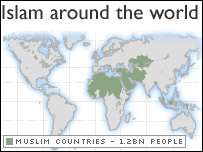
Cultures, just like people, have moods. Cultures are also perennially in a state of flux. The Muslim world is no exception, and why should it be? It is currently in the thick of fermentation – radical social and political transformations on an unprecedented scale are taking place in many Muslim countries, not least those countries in Africa where the population is predominantly Muslim. The mood in the Muslim world, including in much of Muslim Africa, is grumpy at this particular historical juncture. This cantankerous mood is dangerous. Unimpressed with the military might of the United States, which has emerged as public enemy number one as far as the vast majority of Muslims are concerned, their spirits have been further lowered by the utter incompetence of Muslim leadership. Leaders of Muslim nations, even Muslim community leaders at large, are seen as ineffective and are widely believed to be stooges of US imperialism. Yearning for change Muslims the world over are yearning for fundamental democratic changes in the manner in which their societies are run. Fundamental change in the political arena has become paramount, but Western-style multiparty democracy is not viewed as the ideal.
Muslims are harkening back to the glory days of the great Islamic empires of Africa - Ghana, Mali, Songhai among others in West Africa and the sophisticated resplendence of the hybrid culture of the East African Swahili-speaking sultanates and city states. African Muslims have historically been purveyors of Muslim civilisation in the continent. Small wonder then, that Africa is the only continent with a Muslim majority population. Numerically, there might be more Muslims in Asia than in Africa, but it is only in Africa that the majority of countries are predominantly Muslim. North Africa is almost entirely Muslim. West Africa is predominantly Muslim, in East Africa and the Horn of Africa Islam is not only the dominant, but also the ascendant religion. And yet African Muslims are restless. They want democracy, but one that reflects their own cultural identity. They seek political reform and a more serious respect of human rights. Above all, they demand social justice. There is also the problem of how to live side by side in peace with non-Muslim Africans. In Nigeria and in Sudan, for example, multiculturalism and religious diversity has led to serious political tensions that in turn erupted into violence. Proximity has not produced harmony between Muslims and non-Muslims in Africa, rather religious tensions - most palpable in Nigeria in West Africa and in Kenya, Tanzania and Sudan in East Africa. It is these tensions that have slackened the pace of democratisation. Law and order
The main predicament is that an enhanced role for civil society movements in predominantly Muslim societies effectively means the empowerment of militant and socially conservative Islamist movements, many of whom are, to say the least, not particularly interested in Western-style social democracy. These militant Islamist groups are dashing in where governments fear to tread - and nowhere more so than in Somalia, where the Union of Islamic Courts (UIC) instituted law and order where chaos was de rigueur. There was a semblance of law, even though it constituted a strict interpretation of sharia. The credibility and legitimisation at a popular level of the UIC was more or less guaranteed. People everywhere yearn for security and stability. All over the world, Muslims, like Christians, do not want war and bloodshed, political chaos and social injustice. People are very much the same regardless of their religious affiliation and geographic location. The secular transitional Somali government, for instance, has failed to enforce law and order, or to provide inexpensive health, educational and social welfare services. The provision of such services was the reason for the success of the UIC, before its fall. Compatibility So are Islam and democracy compatible in Africa?
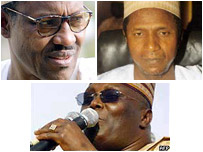
In the upcoming Nigerian presidential elections, the three main candidates are Muslim - Umaru Yar'Adua of the ruling People's Democratic Party, former military strongman Muhammadu Buhari of the All Nigeria People's Party and Atiku Abubakar, current vice-president and presidential contender for the Action Congress. Nigeria, of course, is Africa's most populous nation with an estimated 140 million people. More than 61 million voters are expected to participate in April's elections in what should be the first transfer of power from one democratically elected leader to another since independence in 1960. The point about Nigeria is that more than half of the voters are Muslims. Not only are most of Nigeria's presidential hopefuls Muslims, but the Independent National Electoral Commission includes many Muslims and even the secretary-general of the charity Women's Rights Advancement Protection Alternative, Saudatu Mahdi, is a Muslim. In Nigeria, the question of women's rights under Islamic law has political undertones and has become a bone of contention between secularists and militant Islamists. Odd as it might appear, the best sign that African Muslims are serious about democracy is that issues such as women's rights are being debated even though conservatives in countries as diverse as Somalia, Sudan and Nigeria still have grave reservations about such prickly issues. This is a free online version of the article that appears in the January - March 2007 edition of BBC Focus on Africa magazine. |
LOCAL LINKS  Opinion: African unity still a dream Opinion: African unity still a dream11 January, 2007 | Archive Forum: Is African unity a dream worth pursuing?22 January, 2007 | Archive | ||||||||||||||||||||||||||||||||||||||||||||||||||||||||||||||||
| |||||||||||||||||||||||||||||||||||||||||||||||||||||||||||||||||
| |||||||||||||||||||||||||||||||||||||||||||||||||||||||||||||||||






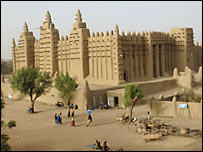
 Muslims are harkening back to the glory days of the great Islamic empires of Africa - Ghana, Mali, Songhai among others in West Africa