How did the book come about? How did the book come about?
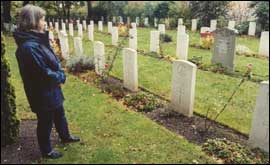
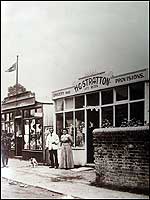
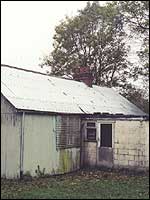
"In 1994 I was researching a book about the Second World War called Sterner Days, which was brought out to commemorate the anniversary of VE Day. "I was talking to people who were around during that time and getting their stories. "I also got a lot of information about the First World War, which I wasn't able to use and so I had to put it to one side. "I soon realised that the amount of information I had gathered was so important - and interesting - that I decided to hang onto it and use the material for this new book. What was Codford's significance in both World Wars? "Before the First World War this was a village of about 500 people, which was eventually taken over by the military. "Because of the rail connections in Codford, thousands of Kitchener's 'new army' came to this area and camped around different parts of the village. "Codford had 15 camps, while the other Wylye Valley villages had 12 between them, so we were significantly important. "The troops, which comprised mainly British, Australian and New Zealand soldiers, departed after World War One but during the Second World War British and American soldiers were deployed in the area. "They built more permanent camps in the village and around the surrounding fields and farms and as a result Codford turned in to quite a 'boom town'. How much evidence is there today of this activity in Codford? "If you go to the Anzac War Graves, where some of the Australian and New Zealand troops were buried, many of whom died as a result of a sickness epidemic, there is an old World War One building, which is used as Codford's Scout HQ today. "On the hill above the village are the remains of a First World chalk badge which was cut in 1916. "We still have some of the foundations of the American maintenence sheds close to the Chitterne Brook. "And the Woolstore Theatre is a part of the history of both World Wars and was used by the troops for messes, entertainment, as a cinema, and a dance hall and it was used by the American Red Cross. So far as the people in the book are concerned, how did you decide who to include? "I was very well aware that there were people who had given their lives and I've been able to tell the story those remembered on the Memorial tablet who lost their lives in the Second World War. "The First World War was more difficult but I eventually managed to compile a list of 37 men with Codford connections who died during the First World War. "These are the men who actually gave their lives during the War and so it was very important for me that these men are remembered as individuals, not just as names on a window or a plaque. "One of the documents that I managed to find was the New Zealand Expeditionary Chronicle. "Wherever the troops were, they had this chronicle which went out to each theatre of war and at different times people would write letters. "The Codford letters make up 51 pages of A4, from 1916 to 1919 - and I've got all of them. "And so I was able to get a picture of what was happening here in Codford - the entertainments, the men in the hospitals and what was wrong with them. "They would write about what was happening around them - sometimes there were comic poems, often very rude poems about the village - so you've actually got the soldiers' humour and you've got the way that it was. "There were also numerous newspaper stories to draw upon - including details of the various training accidents that took place. "Stories include the tragic death of Corporal Button killed by his own hesitation, the burning down of the village shop by Australian troops and the village prostitute that gave troops the clap, which made them so angry rumour has it she was thrown down a well and remains there today!  Click here for Corporal Button's Story Click here for Corporal Button's Story
 Click here for Robin Selby's Story Click here for Robin Selby's Story
 Click here for Bert Doughty's story Click here for Bert Doughty's story
 Click here for Anthony Hancock's Story Click here for Anthony Hancock's Story
 Click here for the Return of the Dollar Bill Click here for the Return of the Dollar Bill
Has all of this made you stop and think what other stories might be out there, which are still waiting to be told? "It's a case of getting to the people and them getting to me. "The more that I can make it known that I'm interested in these kind of things then the more likely it is that things will come." | 



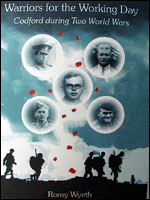
 Warriors for the Working Day is being published in time for Armistice Day.
 View a


 More
More