Four out of five local food producers, surveyed by the Royal Society for the Protection of Birds, have specific environmental goals. However, the RSPB found that these aims were rarely achieved in practice. Examples of environmental goals include actions that have a direct benefit to the countryside and its wildlife in addition to indirect ones such as reducing waste and packaging or sourcing local products and services to reduce 'food miles'.  | | Stonehenge Ales, Netheravon: surveyed by RSPB |
RSPB senior South West policy officer, Mark Robins said: "Local food is widely identified as one of the greatest opportunities for farmers and producers to add value. And he suggests that producers in Wiltshire must learn to trade on the county's environment. "Wiltshire - and the South West of England - is in the vanguard of the local food sector. It is disappointing that an environmental dimension has so far eluded most producers, though hardly surprising given the current lack of support and advice from various agencies," Mark says. Steig Anderson, a Danish Brewer who runs Stonehenge Ales at Netheravon is an example of good practice, according to the RSPB. Using a number of sustainable methods, the award winning brewery, which produces ales and beers using only traditional methods, took part in RSPB survey, which recognised its sustainable practices. Stressing its support for the local area, the business delivers within a fifty mile radius using its own vehicle. 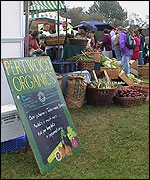 | | Pertwood Organics: meeting environmental goals |
Another Wiltshire food producer recognised for combining their environmental aims with sound business practice is Pertwood Organics Cooperative, based at Longbridge Deverill near Warminster. One of its aims is to bring communities closer together and it encourages people to save money on delivery charges by organising local collection points for their organic boxes. | 



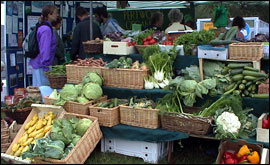
 The survey of around 700 food businesses located across the south west was conducted between February - April 2002 by Dr Sally Harris for the RSPB.
  View a







 More
More