

Sarah Hardman, Senior Physiologist at The Sports Council for Wales, gives us her tips.
Sarah is a British Olympic Association Registered Physiologist and Accredited for Sports Science Support (Physiology) with the British Association of Sports and Exercise Sciences (BASES).
- Firstly, start at the end! Identify your overall goal of the programme, whether it be passing an exam or going for an important interview and identify the time frame you have to work with, then plan backwards from this.
- Establish smaller goals along the way. For example, if an athlete's principal goal is achieving peak performance in 12 months time at a major competition, they will have identified several smaller competitions and training aims along the way to help build their preparation. Build in tests to your planning.
- Evaluate and modify regularly. Your initial programme may change due to factors beyond your control. For example, an athlete may perform better in training than anticipated, or fall short of perceived targets due to insufficient training, injury or illness.
- Be flexible and adaptable. Your training plan may change and you need to respond appropriately.
- Be different! Just because you've established a programme, doesn't mean it can't be modified or there's no room to experiment with different ways of doing things.
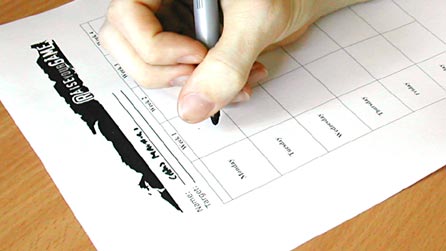
- Plan short-term too. If your programme lasts 12 months, break it down into smaller segments so you know what you're doing long-term and also short-term, day to day. For example, an athlete's overall programme may be achieving peak performance at competition in 12 months time, but their training programme will be planned right down to each month, week and more specifically each day in terms of recovery sessions, the type of training session to complete that day and when rest days should occur. Use different colours, fonts etc to divide up your plan.
- Keep track of how you're doing. Regularly assess yourself or targets you want to achieve along the way. Athletes do this through a variety of measures. A simple example is athlete training diaries, where the aims and objectives and outcomes of each training session are recorded. You could use plus and minus signs to remind yourself how things went.
- Access help and advice wherever possible. Just because you've set yourself a programme to achieve a certain goal doesn't mean you have to go it alone. Seek help along the way or throughout the whole process. For example a triathlete and coach may seek specific technical advice and support for any one of the three triathlon disciplines, swimming, cycling or running. Or a swimmer may need specific nutritional advice for competition in a foreign country. Find out who can help you.
- Finally, once you've achieved your goal, evaluate the whole process and if relevant, modify to apply to other areas in your life.
See also
Latest
Staying positive helps me repair.
British heptathlete
Training ground

Work hard
Colin Jackson reveals more top tips on making exercise part of your lifestyle.