


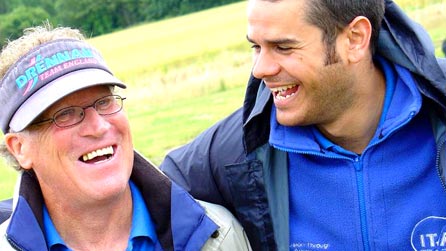
Youth worker, Luke Richards, combined his love of angling with his career to create a fishing school which is helping students to improve their English and Science by learning in the great outdoors.
Raise Your Game: What is the project about and how did it begin?
Luke Richards: It began in 2007 as a community angling project, when I was a Youth Worker at Willows High School. I developed the project as a way of rewarding the pupils who had been meeting their agreed targets for attendance and behaviour. The response, and the effect that the project had within the school, was quite inspiring and I started to get the idea that this could be rolled out across the city.
I continued to develop the project, which has now become Inclusion Through Angling (ITA), as a private company outside school. With the close support of Deputy Head Steve Davies from Willows High School, and the enthusiasm of the pupils, I was fortunate to develop two fully accredited courses; OCN Introduction to Angling and the Environment and the Sports leaders UK L1 award in Sports Leadership.
RYG: What problems lead young people to you?
LR: A lot of young people become disengaged with education for a variety of social, emotional and behavioural reasons. This can then lead to non-attendance and sometimes involvement with drugs, alcohol and crime. So it's identifying these people and offering them a new way of learning that is more appropriate to their needs.
RYG: Why do you enjoy angling and why should young people take it up?
LR: I feel most relaxed at the weekend when I'm either on my own, or with a couple of my buddies, up in the Wye Valley absorbing the beauty of the environment around us. The sport becomes the vehicle for getting out to the great outdoors. It can be anything; mountain-biking, walking, photography or golf.
It really engages me with the environment, and I'm just as passionate about fish, as a bird watcher is with birds. We have just become so commercialised in our lifestyles. The best things in life are free.
RYG: How can angling boost self-esteem and confidence?
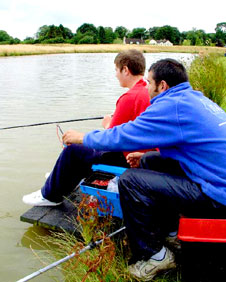
LR: The great thing about angling, which is very different to other sports, is that you can set specific aims and learning outcomes appropriate to the needs of the group that are achievable yet challenging. This could be things as simple as holding the rod in the correct position, or to catch a fish.
A lot of young people come to me with low self-esteem because their lives do not provide them with the opportunities to achieve success, gain recognition and achieve praise. It's about focusing on the individual and helping them to achieve at any level.
Steve Davies, Deputy Head of Willows High School, the pilot school for this project, has witnessed first hand the resulting improvement in motivation, self-esteem and attitude to learning.
Steve Davies: The pupils involved in the scheme were unlikely to ever think they were going to have the level of education that would allow them to go on to higher education, but now they can. They have extensive portfolios of work which has been externally verified and represents all the hard work they have produced.
Some of these pupils have learnt more and produced more work in five months than they have in over three years. They are evaluating, analysing and problem solving. It's high level learning, but presented through a medium that they enjoy.
RYG: In addition to nationally recognised qualifications, what wider skills does this course develop?
LR: Angling itself teaches patience, it teaches organisation, and respect for the environment. By being part of the ITA programme you have to have the commitment to attend regularly, turn up on time and to engage with the course. You have to be able to work with others and have respect for one another.
Through the course young people can learn key curriculum subjects such as biology, fish anatomy, food chains, photosynthesis, aquatic plants, how the water cycle and the contours of the river affect fish location.
RYG: What would be your advice for any young people looking to get involved in angling?
Commercial fisheries are largely the way angling is going these days for junior anglers. Its safe, they have facilities and there are people on hand.
Get involved with your local fishery. Book yourself some lessons with a qualified angling coach or see if they are running any taster sessions like we do. Buy a weekly fishing magazine, watch fishing on the television. If you've got an interest in it, get out there and do it!
RYG: Do you need any specialised equipment?
LR: All equipment is provided for with ITA right down to thermal and waterproof clothing, but you can set yourself up for less than £100. That's what is great about angling. You can just jump on your bike with a rod, a reel and a box of fishing tackle and be on your way. It's better than being at home, button bashing on a computer or console. Get out there in the fresh air!
Any pupils or parents interested in gaining a placement with Inclusion Through Angling, need only speak to their head of year or school (14-19 Extended Opportunities) Co-ordinator.
See also
Elsewhere on the BBC
Elsewhere on the web
Latest
Failing can be great because you learn about yourself. It makes you feel alive when you achieve things.
British distance runner
Training ground

Work hard
Colin Jackson reveals more top tips on making exercise part of your lifestyle.



Don't forget!
EA rod licence - Compulsory for all anglers aged 12 years and over. £5 for whole year. This can be purchased at your local post office or online via the Environment Agency.