

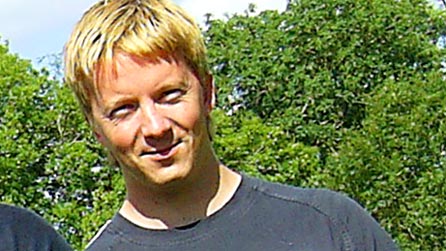
The Cardiff Blues coach says dedication, and early nights, will help you be the best.
Colin Jackson: How do you begin to plan the season's training?
Trystan Bevan: You have a look at the players you've got and identify their strengths and weaknesses. You also take into account how long they've been playing or what sports they've been doing, so you try and analyse where exactly they are in their career, and plan what's best for them as the season goes on.
CJ: How do you get the players to do the training that you set them?
TB: It's very much a two way thing. It's not just a case of me telling the players what to do, there's a lot of discussion involved. You try and show the player what he's good at, what he needs to improve on; his own motivation is an important factor as well. You come to an agreement between us as to where to proceed from there.
CJ: The players' ambitions and dedication, how does that kind of mindset help their training?
TB: Dedication is probably the most important aspect, because talent has already got them here. They're already the cream of the crop, but they need to improve that 5% to become the best. Professional rugby players have been elite athletes over the last 20 odd years, but it's only in the last two or three years that they've actually taken absolute dedication on board.
CJ: What punishment do you give some of your players if they don't really pull their weight in training one day? To be honest, everyone hates something in training! [pulls a face]
TB: Some people would say 45 minutes with me is punishment enough anyway! [laughs] But the players here get fined for any number of things. Getting them hitting a tackle bag for a minute is always a good one, and taking them to the sand dunes in Merthyr Mawr is always a favourite.
CJ: So do they hate you for that?
TB: Oh they despise me for it! [laughs]
CJ: How do you pull them back into the mainstream squad once they've suffered a bit of discipline? Is there any attitude that the rest of the players will show towards them - because there is a reason for the punishment?
TB: Of course there's always a reason for the punishment, but the pack is more important than the wolf, especially in a team sport. So if one player deviates from what is best for the team he needs to be identified and brought back into the fold.
CJ: What is more difficult: rehabilitating back from injury or keeping the top players at their peak?
TB: Probably the rehabilitation is the most difficult part for the player, because obviously it's frustrating for him. With rugby being a collision sport, it's frustrating for the coach to have someone who you know is in peak condition, get a knock in the game and be out for a couple of months. So that is probably the most frustrating part, but you've got no real control over it unfortunately.
CJ: How do you instil some kind of discipline into the players' social lives? Because obviously if they're up until 3 o'clock in the morning training at 10am is not going to be the best.
TB: No, one thing we've done in Cardiff for the last few years, which has been very unpopular, is if we play on Saturday we come in on Sunday morning first thing to do a recovery session in the gates. That's one of the biggest shifts over the years.
You probably find the young single guys who are living the dream are the only ones who are out. The majority of the squad now understand that socialising has to stop as they're professional athletes.
CJ: The individual attributes that the players bring, whether they're a centre, scrum-half or flanker, and their preparations have to be slightly different - how do you manage that?
TB: It's very similar to preparing an athletics team. You've got your shot putter, who I'd equate to a hooker, who needs a lot of power, a lot of speed, a lot of flexibility; you've got the wingers then whose job is to just finish, they need a lot of repeated speed ability, to run 50 metres constantly. So it's very similar to preparing the different events you've got in athletics. The only difference for me is it's 15 players working within the same team, but the principle's the same.
See also
Elsewhere on the BBC
Elsewhere on the web
Latest
Attitude is massive. You can have talent, but if you don't have the right attitude, nobody's going to take you on.
British long distance runner
Training ground

Work hard
Colin Jackson reveals more top tips on making exercise part of your lifestyle.