

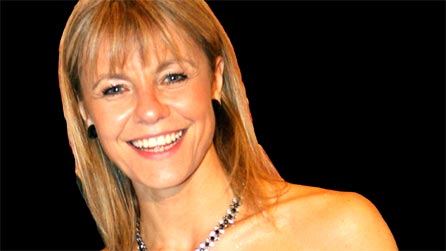
"The more you put into something, the more you get out of it," says the Welsh marathon runner.
Raise Your Game: Why running?
Tracey Morris: I did it at school and then I didn't do anything until I was 30-years-old. I did the London Marathon just to raise money. At 36 I decided to run it properly. Running's great for getting out in the fresh air and keeping fit.
RYG: You're in the middle of a race and every fibre and muscle in your body is telling you to stop. How do you motivate yourself to keep going?
Name: Born: From: Job: Event: Achievements: TM: You need to remind yourself of all the hard work you've put in to get to the race, and how you shouldn't waste it by giving up. My mind gives up before my body so I just keep thinking, 'If my mind's given up, surely my body will keep going....You've got to get there.' When I ran at the Olympics in Athens, my mother, who absolutely hates cities, came out to watch. I knew she didn't really want to be there and I just thought to myself 'If I don't get to the end of this race when she's come all the way from Anglesey, she'll kill me!' That's a big enough incentive (laughs). RYG: What's the difference between a good and a great athlete? TM: I'll ask Paula (Radcliffe) what she thinks (laughs). I think it's all about dedication. The more you put into something, the more you get out of it. RYG: What sacrifices have you made to get you where you are? TM: I work full-time so I have to fit my training in before and after work. I get up at five o'clock in the morning to train before work. I run home from work and I run at weekends. When everybody else is going out and enjoying themselves, I'm usually the driver. You do make a lot of sacrifices, but it's worth it.Profile
Tracey Morris
9 September 1967
Holyhead, Wales
Contact lens fitter
Marathon
Fourth place at the Melbourne Commonwealth Games (2006)
RYG: What have been the highlights of your career so far?
TM: Everything! I just feel so lucky to be competing at 40-years-old. At 36 I hadn't represented Great Britain. In those four years I've done all four major championships. That was like a dream for me. I went into the Commonwealth Games in Melbourne and I felt bad because I'd just had an Achilles operation. Having had an operation I didn't think I'd get there. Then I managed to come fourth so I was really pleased. As long as I do as well as I can do, I'm happy.
RYG: And the lowlights?
TM: For the European Championships in Gothenburg I felt fine. I was running to the best of my ability and I just had a really bad race on the day. It didn't go well and that was frustrating.
RYG: What advice would you give to someone that wants to make it to the top as an athlete?
TM: I did it at school, but there were no clubs afterwards, so I gave up. It takes a lot of hard work to get there so don't give up. I feel like I've had a second chance by coming back to it later on in life. Not everybody gets that opportunity.
I don't think you have to give up everything else in your life to succeed. You just need to get the balance right. You need to work hard in school, outside of school and work hard at your athletics. If you get that balance right, you can continue it and still enjoy a social life as well. Join a club and do it with your friends. If you're involved in a group then your social life is your running. Then it's not so much about hard work.
See also
Elsewhere on the BBC
Elsewhere on the web
Latest
If you've got the right mental skills you can apply them to any challenge that you meet.
Former UK Athletics performance director
Training ground

Work hard
Colin Jackson reveals more top tips on making exercise part of your lifestyle.